
Pellet burner animation — Mocek Kotły

At a trade show booth, a pellet boiler looks like an elegant cabinet with a door. Yet the whole advantage of the design sits in the burner, which nobody gets to see. Mocek Kotły from Pleszew, Poland (kotly-mocek.pl), needed a way to show its OXYPELL® burner in motion — at trade shows, in sales presentations and in marketing materials. The answer is one minute of 3D animation in cross-section that opens the boiler right in front of visitors.
The eye stops people faster than words

Sight is our strongest sense — what we see grabs attention faster and stays in memory longer than what we hear or read. At a trade show you can see this with the naked eye. In a hall full of booths, conversations and noise, people stop where something moves and makes sense at once. A sales rep’s story about grates and air streams has to be heard and imagined. An animation only has to be seen.

From the outside, a pellet boiler is a casing, a control panel and a flame in the sight glass. What sets one boiler apart from another — how the fuel is dosed, where the combustion air comes from and what happens to the ash — is hidden inside. A cutaway animation opens the unit in front of visitors and shows what words cannot convey so that everyone gets it the first time. Short captions in the frame guide the viewer even when the hall is too loud to hear any sound.

Six phases of the burner’s work

The film opens on the grey body of the burner and, after a few seconds, cuts it in half. From that moment the viewer looks inside and follows the whole cycle — from the first pellet dose to cleaning the grate.

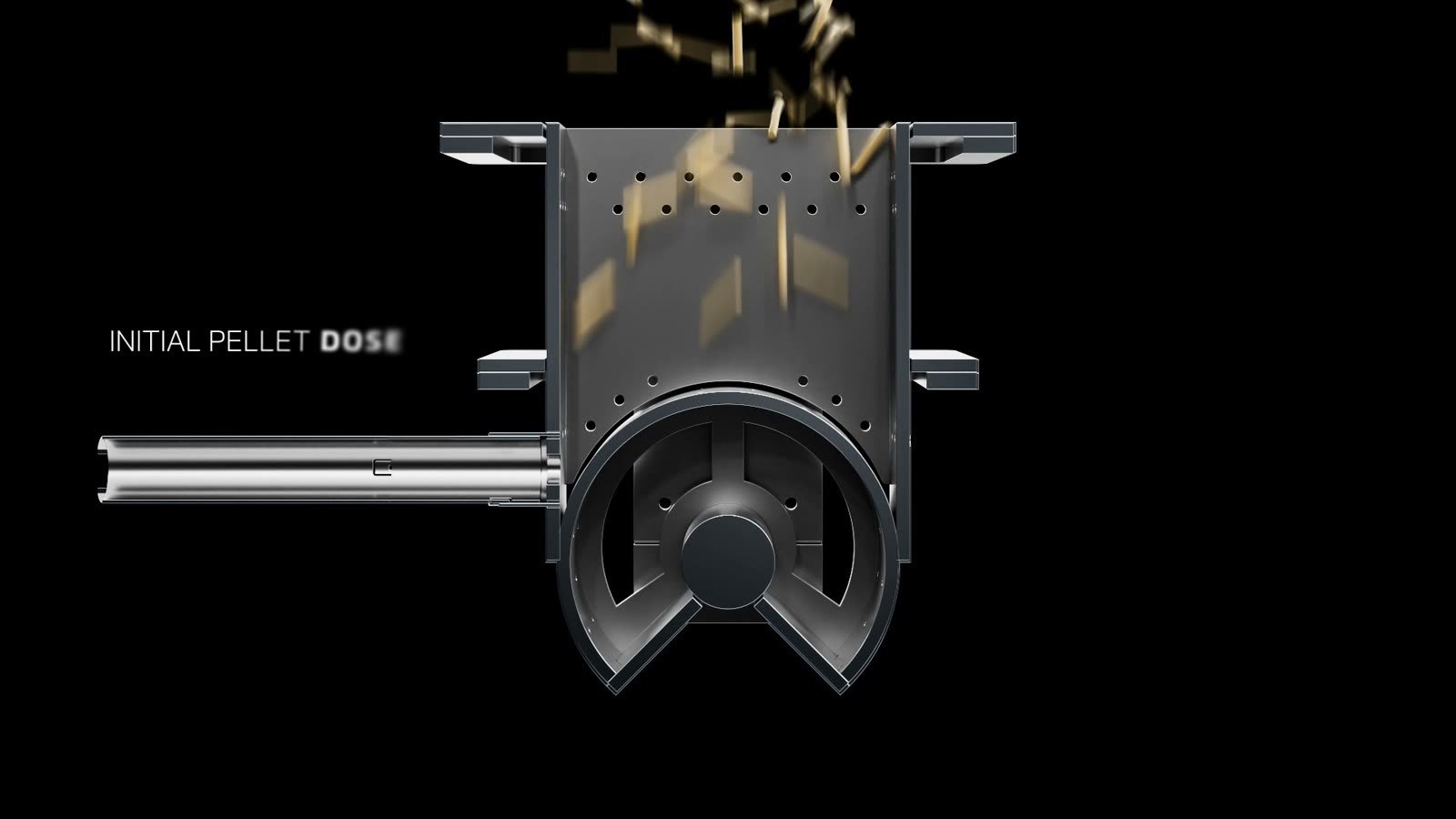
Burner cutaway — the first pellet dose
1/6First pellet dose — fuel drops into the combustion chamber
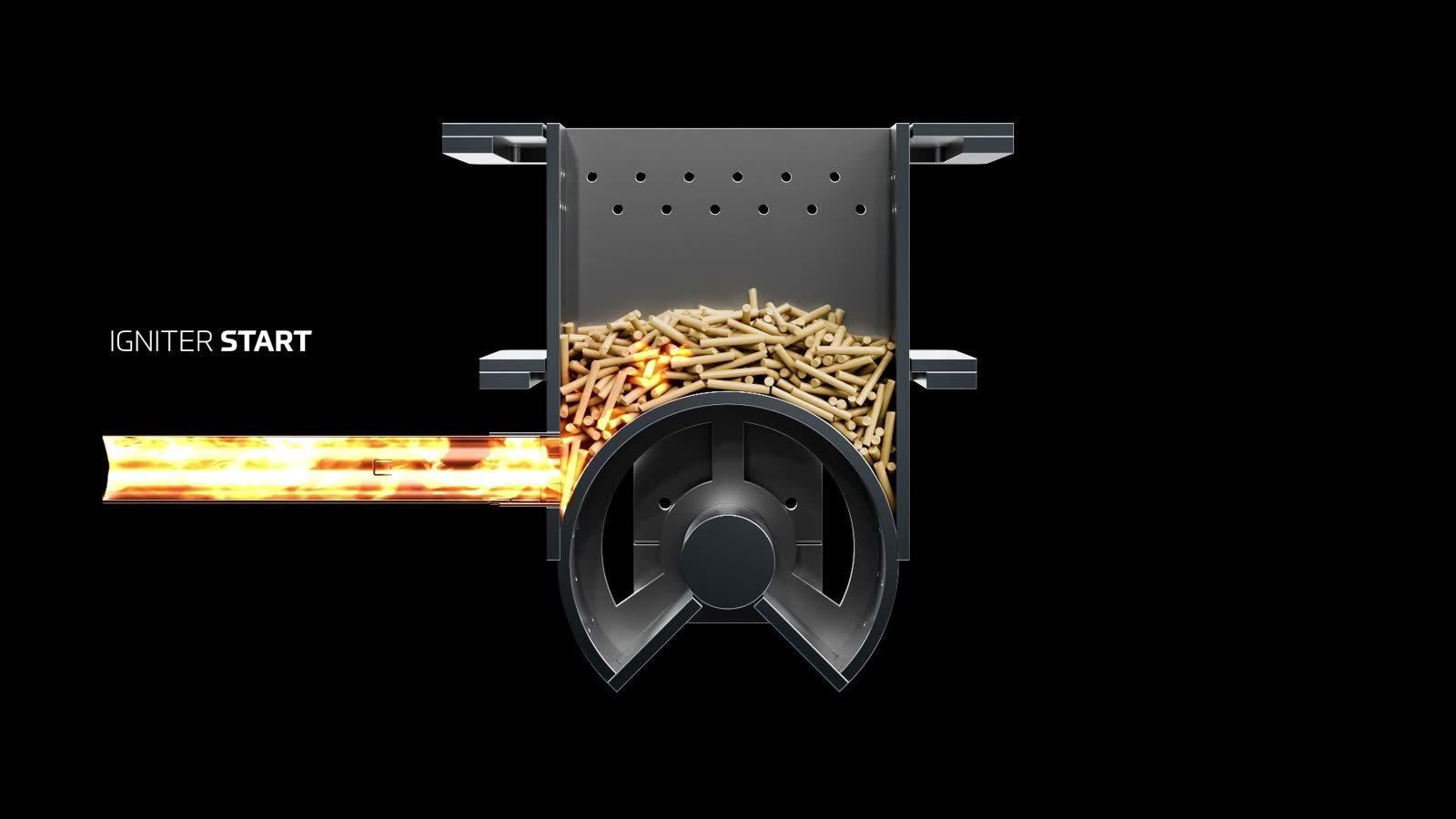
Burner cutaway — the igniter starts
2/6Igniter starts — the heated igniter lights the bed
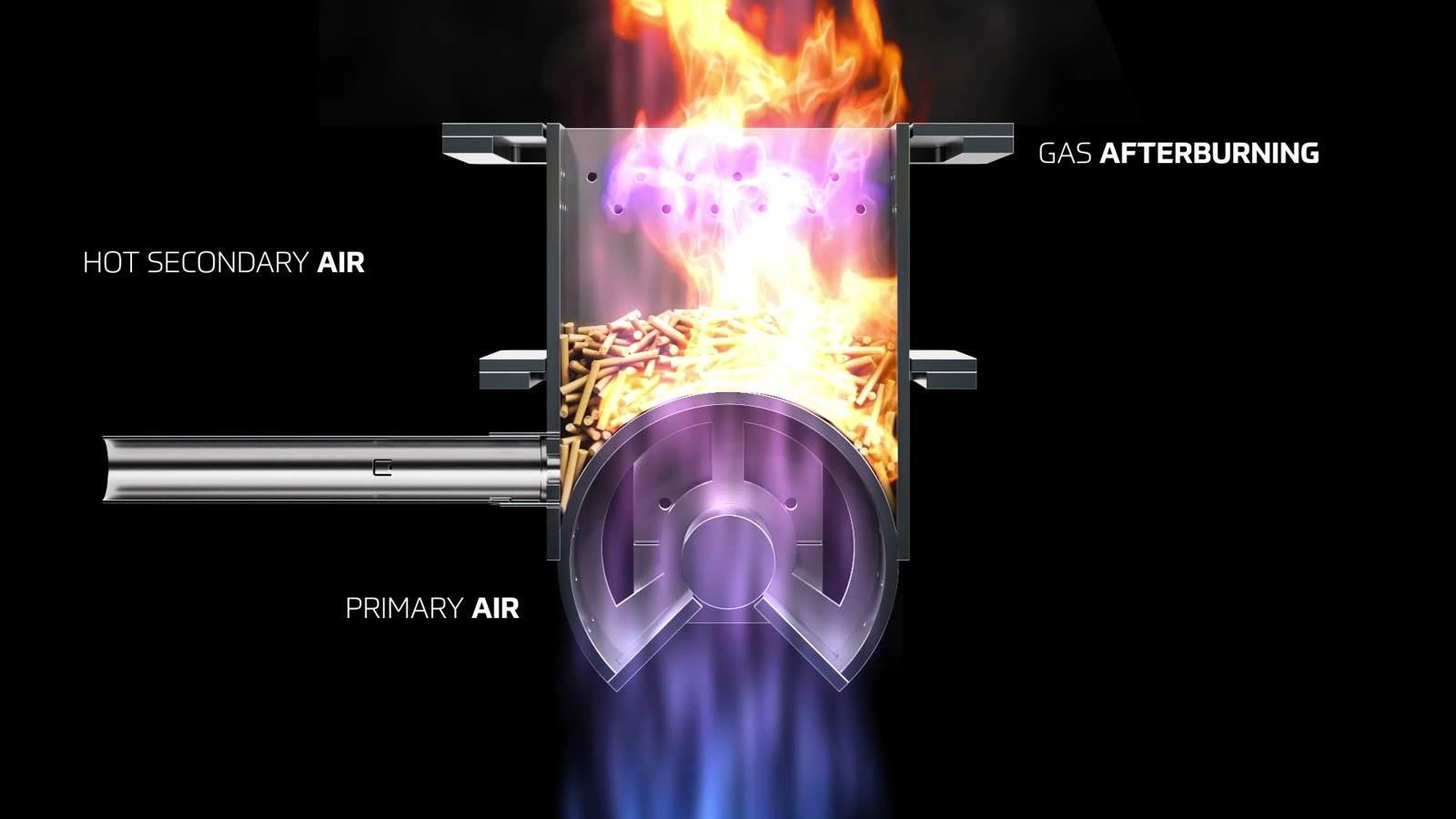
Burner cutaway — primary and secondary air, gas afterburning
3/6Primary and secondary air — the lower stream sustains combustion, the upper one burns off the gases
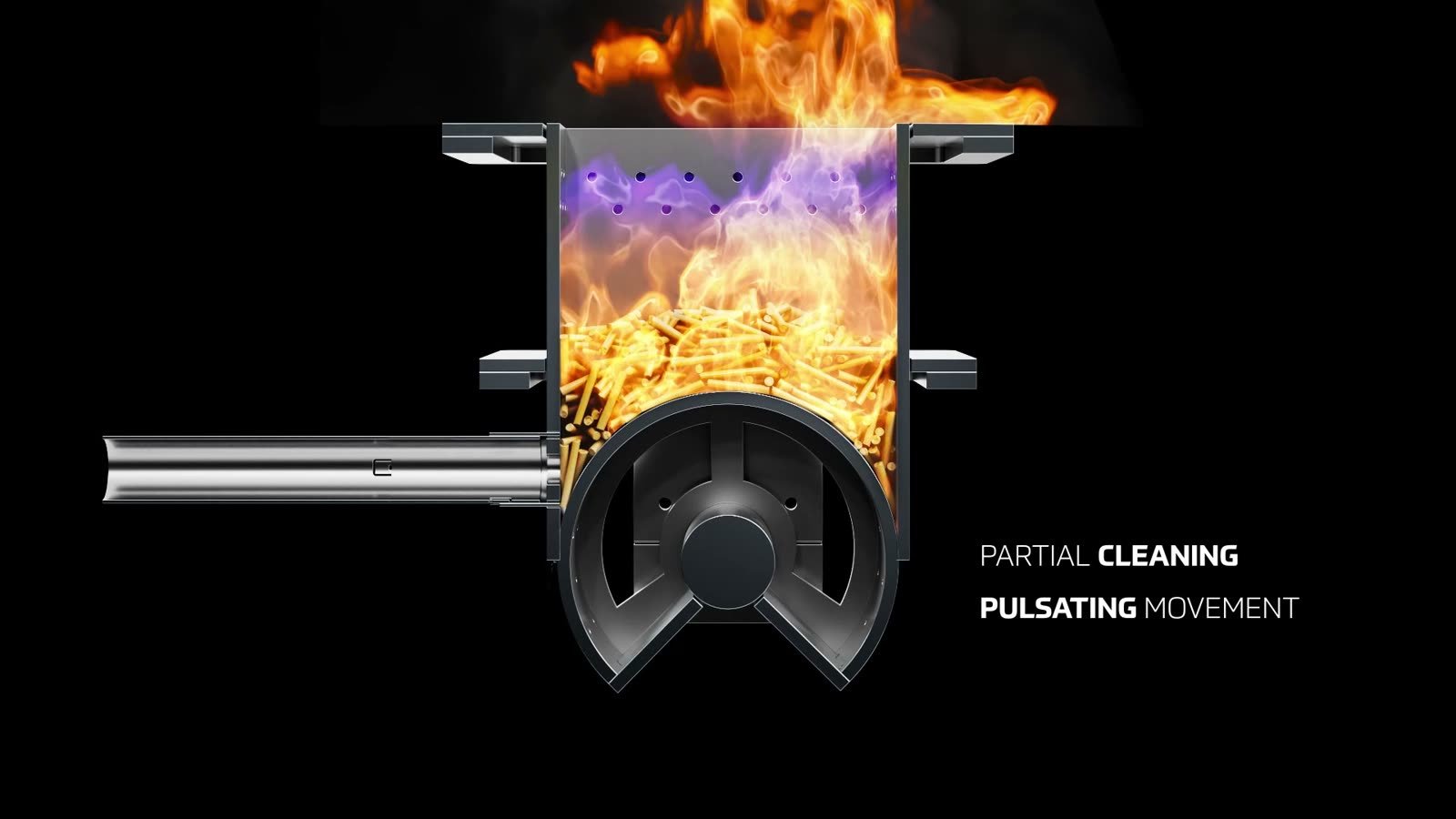
Grate cleaning with a pulsing motion during combustion
4/6Cleaning during combustion — the grate vibrates and shakes off ash, the fire keeps burning
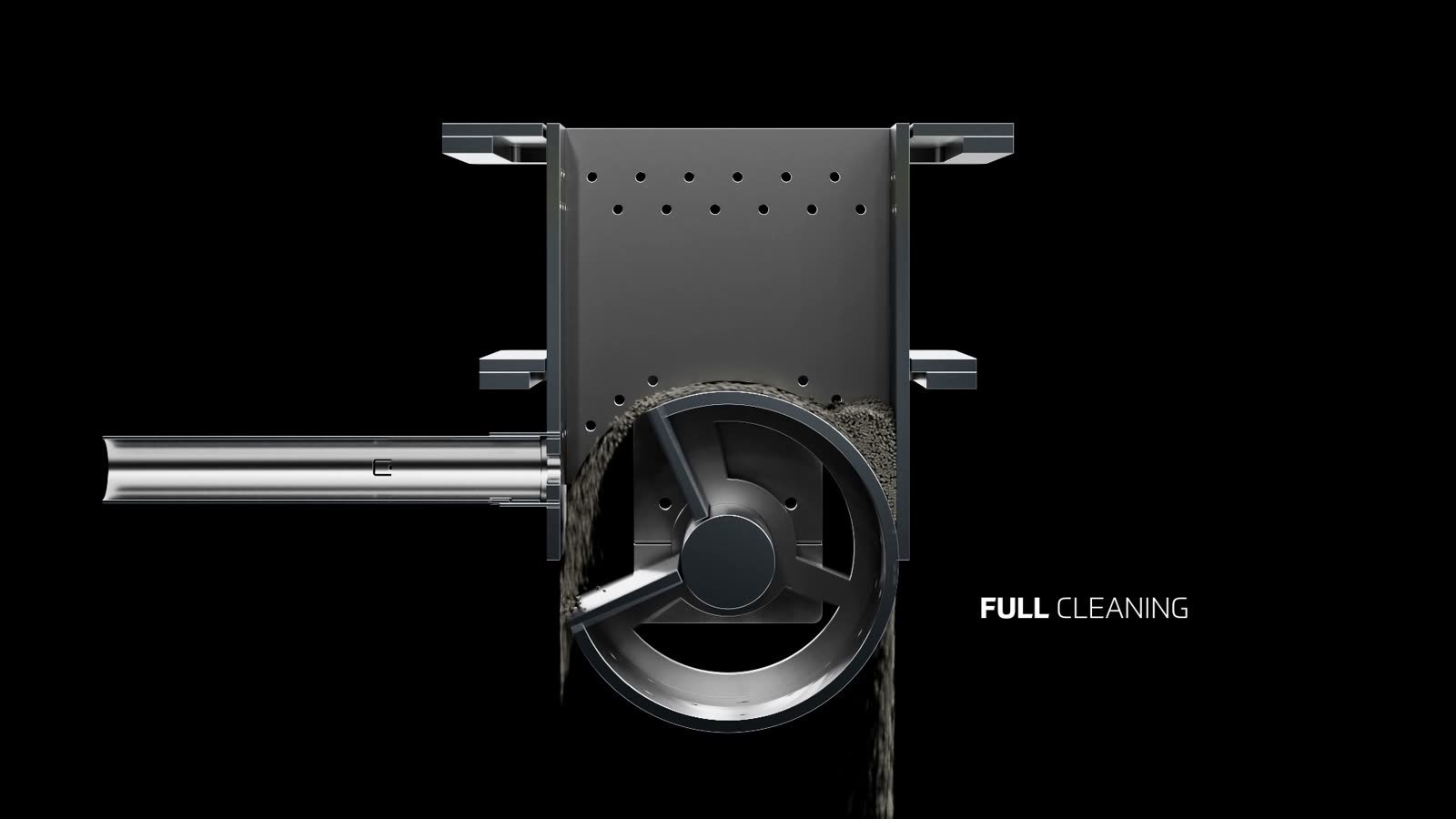
Full cleaning — the grate rotates after shutdown
5/6Full cleaning — after shutdown the grate makes a full turn
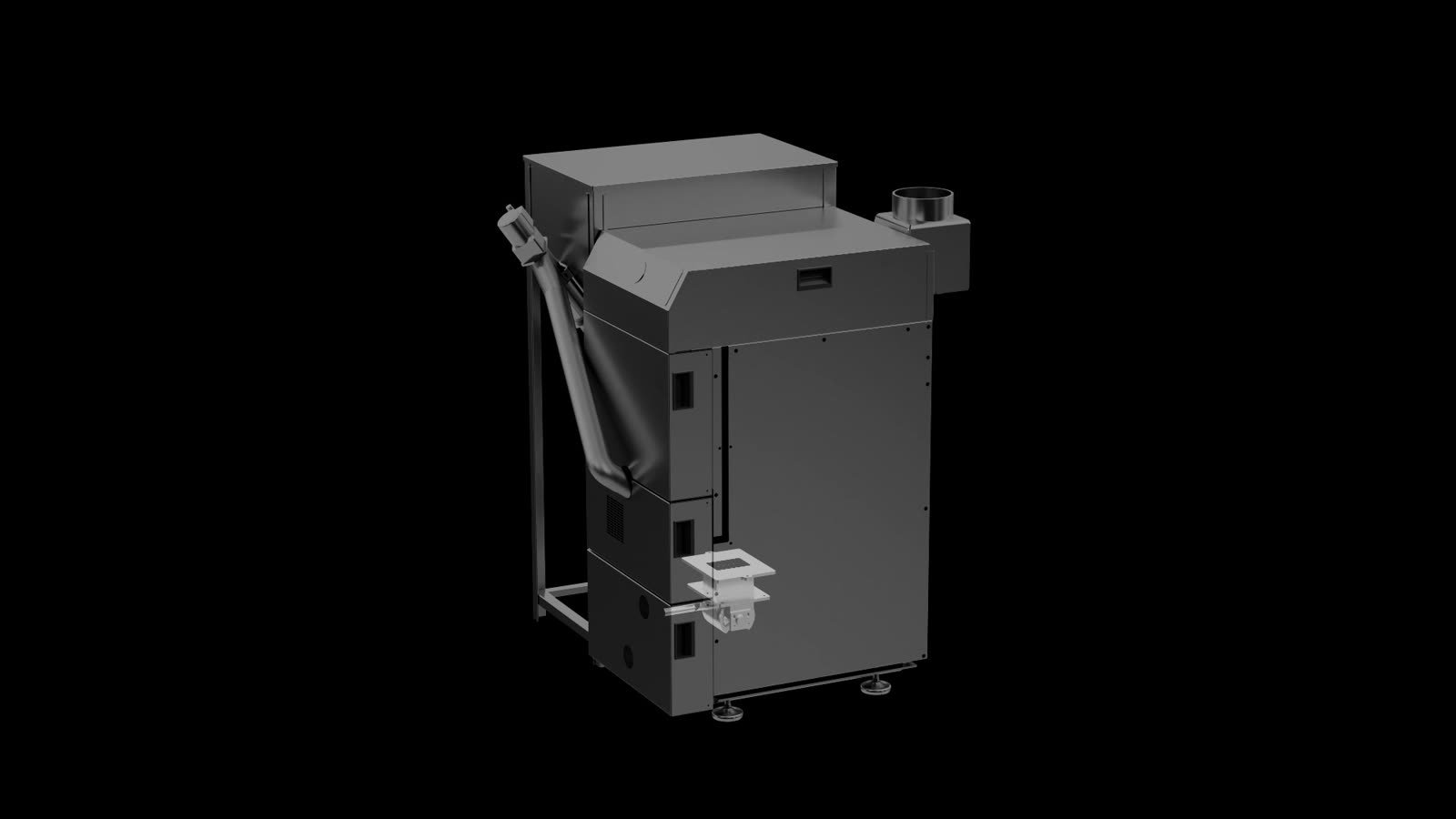
Mocek pellet boiler with feeder — 3D render
6/6The finished boiler — the burner in place, boiler with feeder

What 3D animation delivers here

  1. Shows the inside without taking it apartThe cutaway opens a burner you cannot see at the booth — with fire, motion and the order of events.
  2. Stops passers-byFlame and motion are visible from the far end of the aisle, and captions work without sound.
  3. Explains the whole cycle in a minuteSix phases of the burner’s work in one film, in logical order — without a technical lecture.
  4. Supports the sales conversationThe film can be paused on any phase and replayed when a customer asks about operation or cleaning.
  5. Speaks to many markets at onceThe version with English captions and no voice-over works for audiences at home and abroad.
  6. Delivers ready-made catalog imagesEvery phase is a full-resolution render — for print, the product page and social media.

A spec sheet says “yes”. An animation shows “how”

Cleaning the grate during operation is a feature Mocek highlights in its materials about the OXYPELL burner; according to the company, the solution is protected by a patent for an ash removal system that works without shutting the boiler down (Murator, sponsored article, in Polish).

In a spec sheet, a feature like this takes up one row of a table, next to output, efficiency and hopper capacity. For a design engineer that is enough. Installers, distributors and end customers, however, want to understand how it works and what is in it for them. The animation answers both questions at once: the grate under the flame makes a pulsing motion, the ash falls and the fire keeps burning. A few seconds of footage replace a paragraph of technical description and show the benefit right away — less work around the boiler.

Grate cleaning with a pulsing motion during combustion
The grate works with a pulsing motion under the flame — ash falls out during combustion.

How much does an animation like this cost?

The calculator gives an estimated cost of a cutaway animation based on film length, the number of phases and whether a CAD model exists. Result in two minutes, no contact details needed.

Check the estimated cost

One CAD file, many forms of creative

For a technical animation studio, a device’s CAD file is the starting point for a whole family of creative work. The model of the burner and boiler is built once — and then the same 3D scene can produce further pieces, each for a different audience and a different channel.


  1. ExplainerFor distributors and end customers: how the boiler works and why it needs less maintenance. It sells the benefit, not the parameters.
  2. AdvertisingA short, dynamic version for campaigns and social media — fire and motion in a dozen or so seconds.
  3. InstructionalFor installers and service teams: installation, operation and cleaning step by step. Fewer questions to the technical department.
  4. Website banner and graphicsA looping video in the product page header and renders for the catalog — without a photo shoot.

The benefit is simple: each additional form means new shots, editing and format, not production from scratch. The manufacturer gets a consistent image of the device everywhere — from the booth to the manual — and every next piece costs less than the first. More on this approach: 3D product animation.

Heating and ventilation manufacturers face a similar challenge: the most important things happen inside the device or in the air around it. For Flowair, 3D animations explain destratification and how an air curtain works so that anyone can understand it, not just an engineer. How animation helps heating and ventilation manufacturers: 3D animation for HVAC.


Frequently asked questions

Questions heating equipment manufacturers ask most often when preparing for a trade show — about materials, film length, channels and cost.


Can a cutaway animation be made without the physical device?

Yes. CAD models or technical drawings are enough, and the successive phases of operation — dosing, ignition, combustion, cleaning — are agreed with the design engineer. Neither a prototype nor a unit from the factory floor is needed.

This means the animation can be ready before the device premieres at a trade show. It is a common situation: the product is still in testing, while the booth and catalog have to be prepared well in advance.


How does a burner in a pellet boiler work and what is worth showing in an animation?

In a pellet boiler, a feeder doses pellet fuel into the burner, an igniter lights the bed and a fan supplies combustion air. Designs differ in how they feed fuel, how they route the air and how they remove ash.

These differences are worth showing, because from the outside boilers look alike. In the animation for Mocek Kotły the key elements turned out to be the two air streams and grate cleaning during combustion — features buyers ask about most often and cannot see at the booth.


How long should a trade show booth film be?

Ideally one that can be watched while walking past the booth — from several dozen seconds to about a minute, played in a loop. Longer material is worth dividing into clear phases so that each part makes sense on its own.

Sound often cannot be heard in the hall, so short captions in the frame work better than a voice-over. A version with captions in one language, such as English, also serves foreign visitors at no extra cost.


Can the animation also produce images for a catalog?

Yes. Every frame is a full-resolution render suitable for print, the product page and social media — like the six phase frames shown above.

It is worth pointing out at the start which phases should go into the catalog. Then the frames are also composed as standalone images, with room for a description, not just as stills from the film.


How much does a cutaway animation of a device cost?

The cost depends on the film length, the number of phases, effects (fire, airflow) and whether a ready CAD model exists. An animation with fire and airflow takes more work than a simple exploded view.

The pricing calculator shows an estimated cost in two minutes. An exact quote follows after a short conversation about the materials and the places where the film will work.


Have a similar project?

Describe your product and the channel where the animation will work — we will reply with suggested shots and a quote.