From a CAD file or a sketch
The model is built from the engineering documentation: needle, wings, tubing and holder in the proportions of the design. A new variant means changing a parameter, not booking another photo shoot.
We cut the same model and the same shots into different formats, depending on who is watching and where. Pick an application and we will show it on an example from our own work.
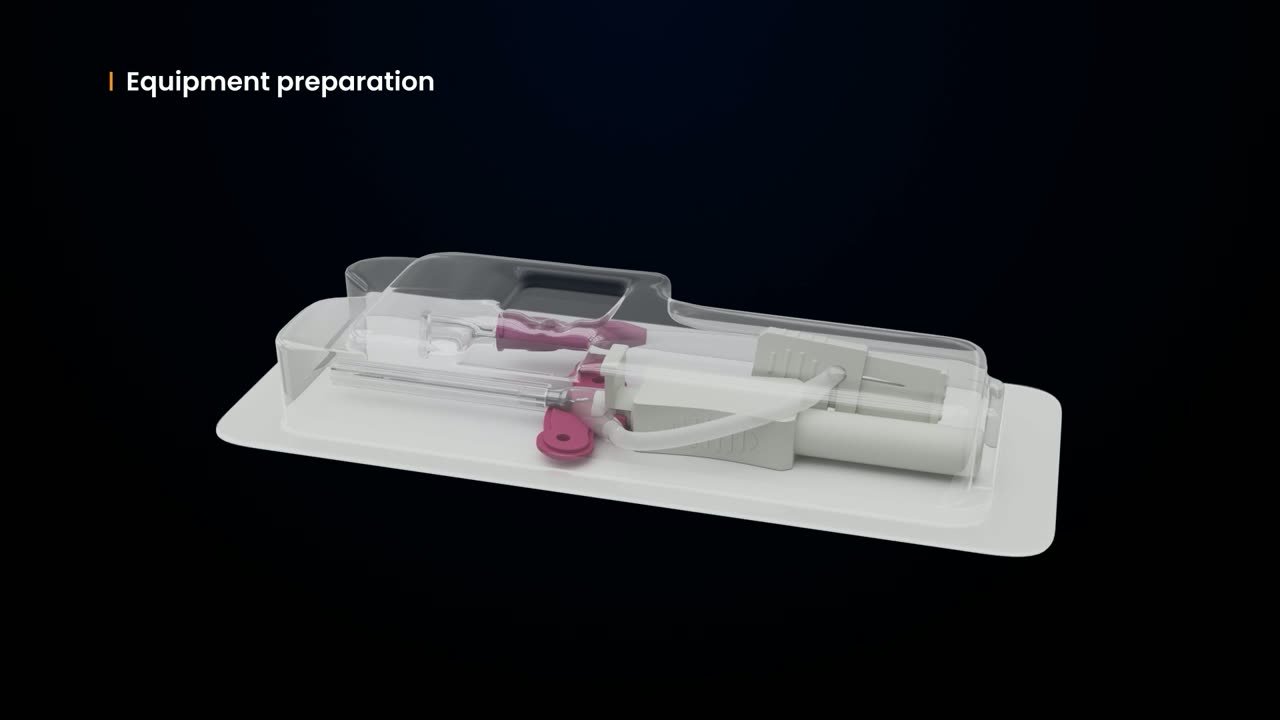
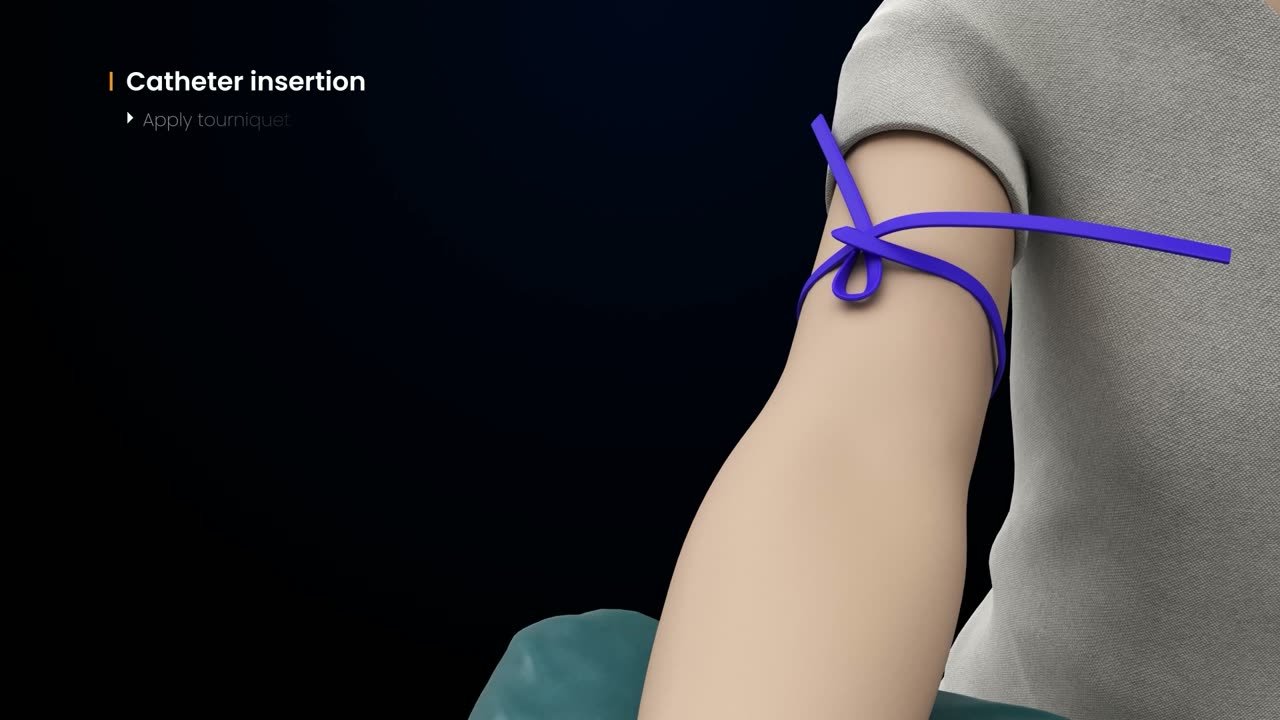
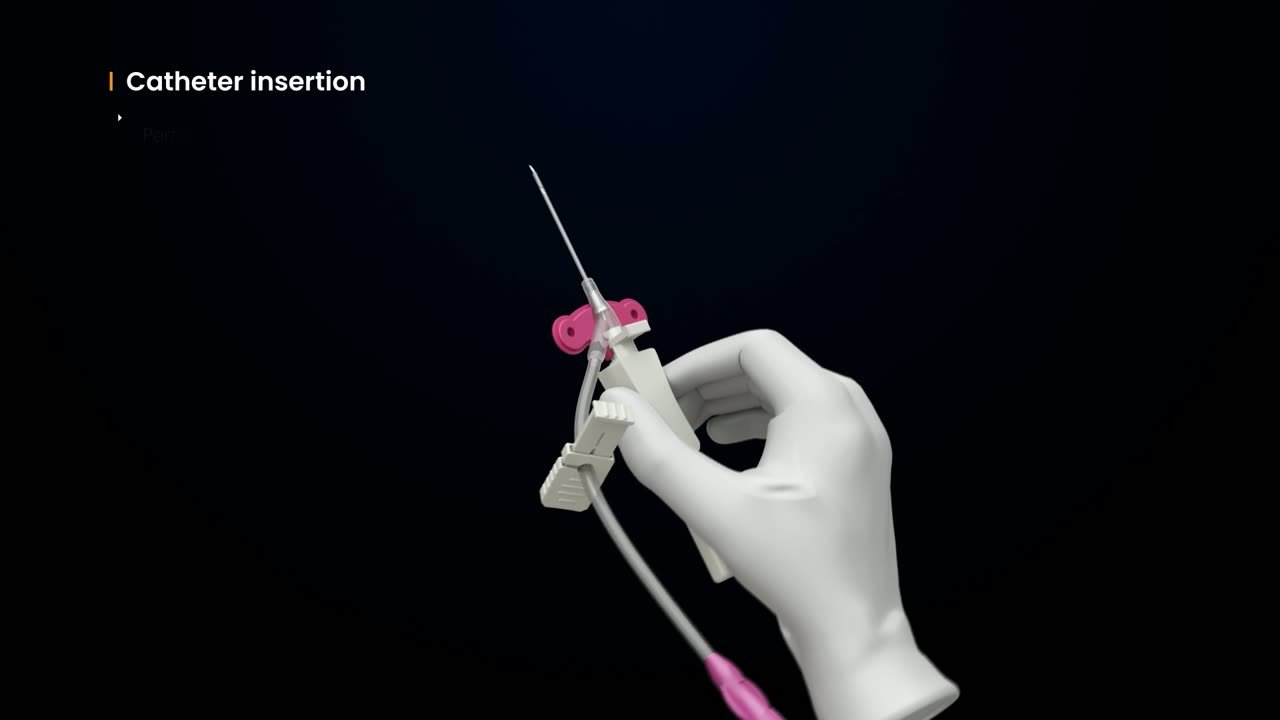
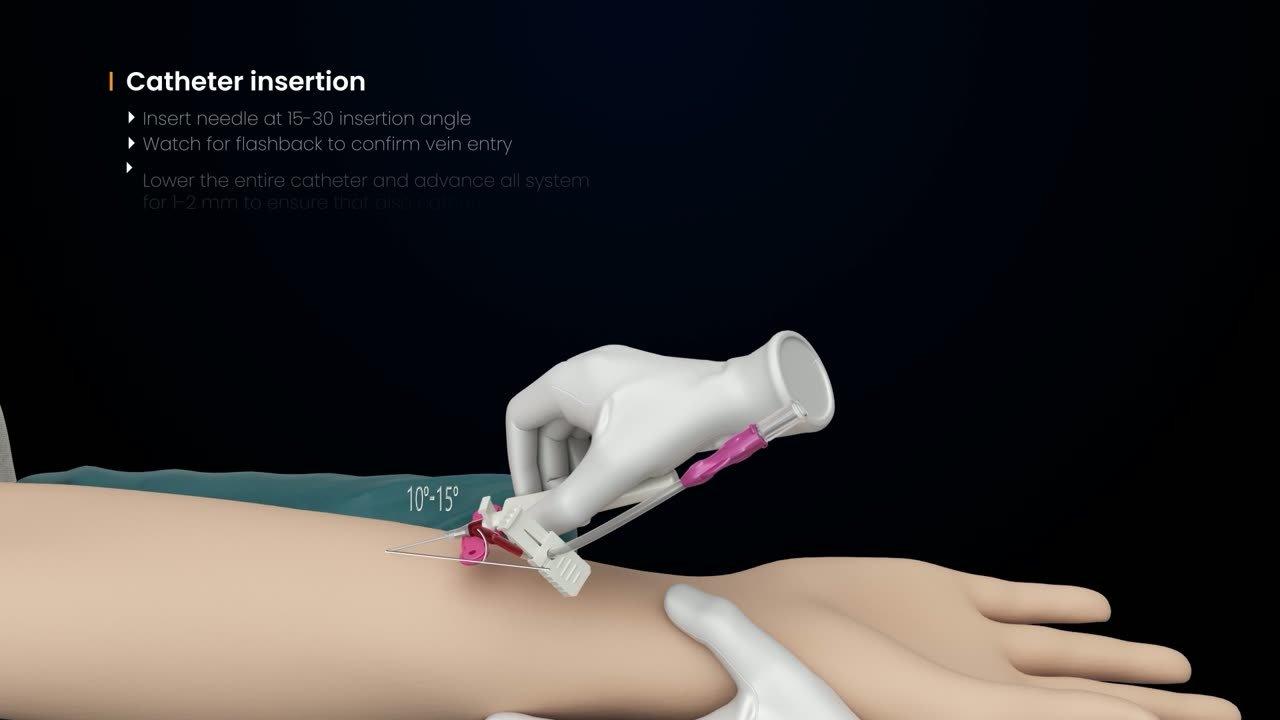
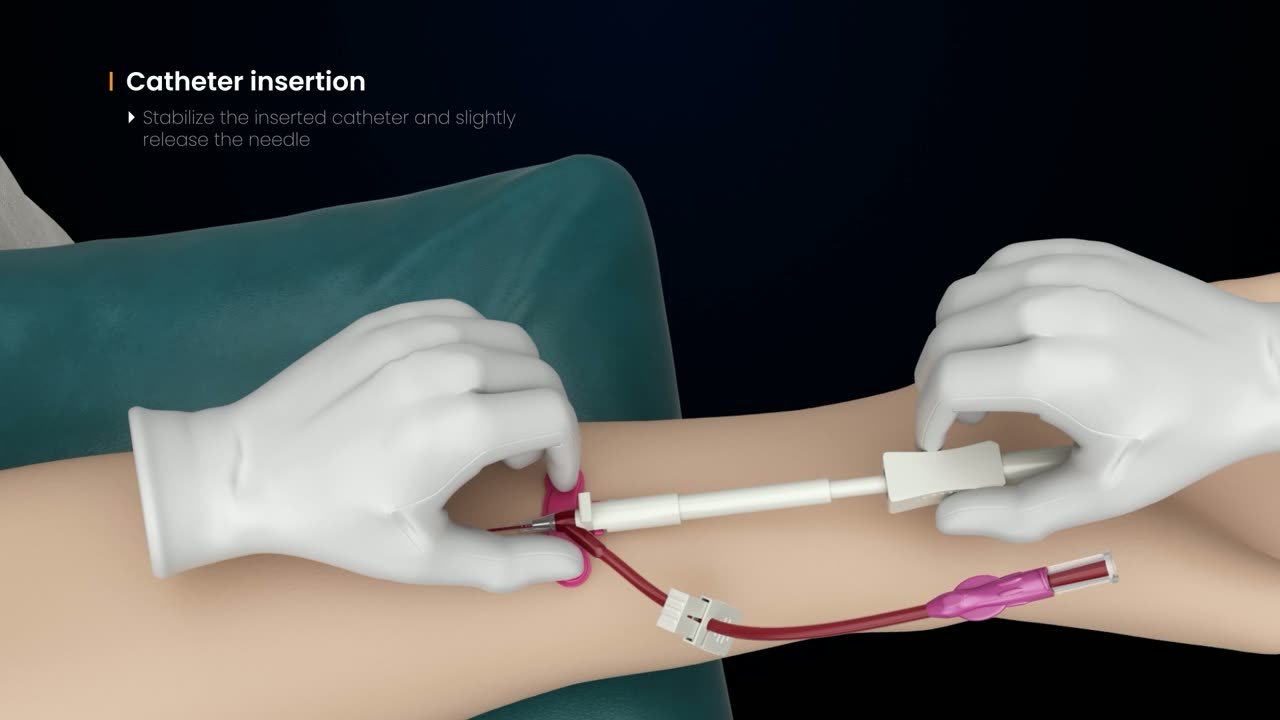
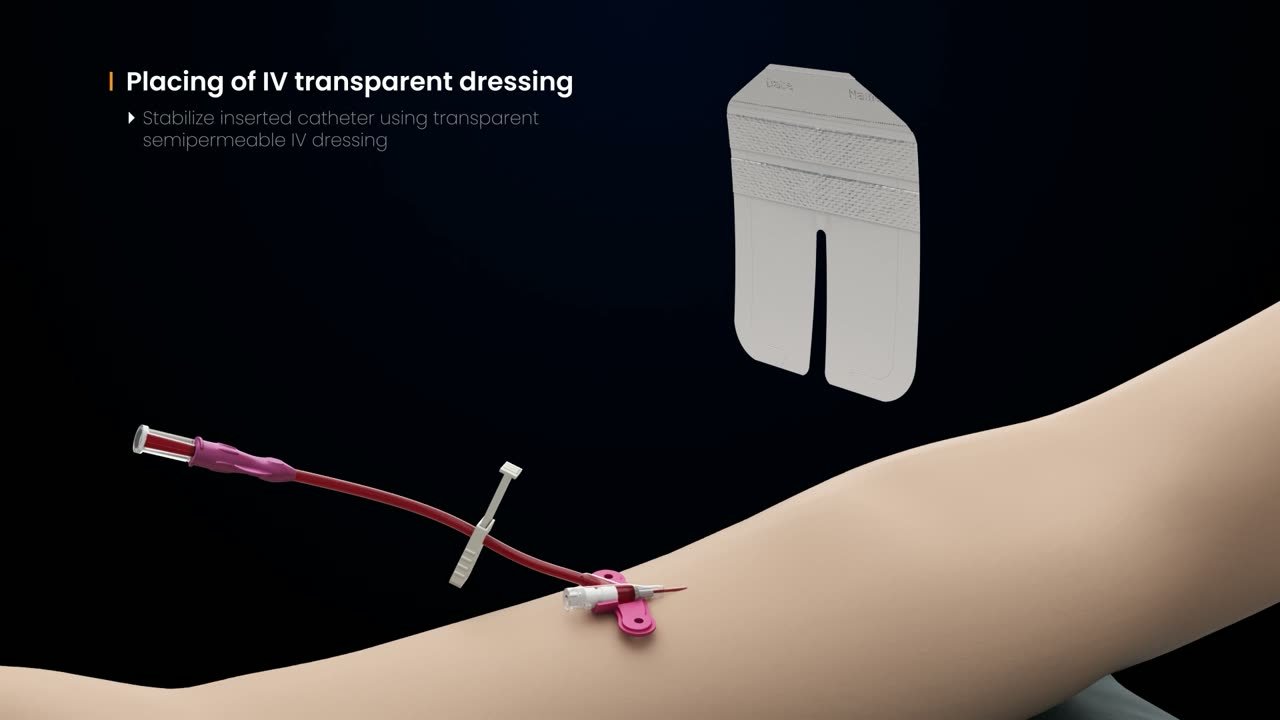
Kit preparation, tourniquet, insertion, connection, dressing. Every step gets its own shot and caption, and the camera sits wherever the hand movement reads best. A film like this complements the device’s instructions for use and shortens onboarding for new staff.
Project: Sol-Millennium · closed-system IV catheter
How we make explainer videos and instructional films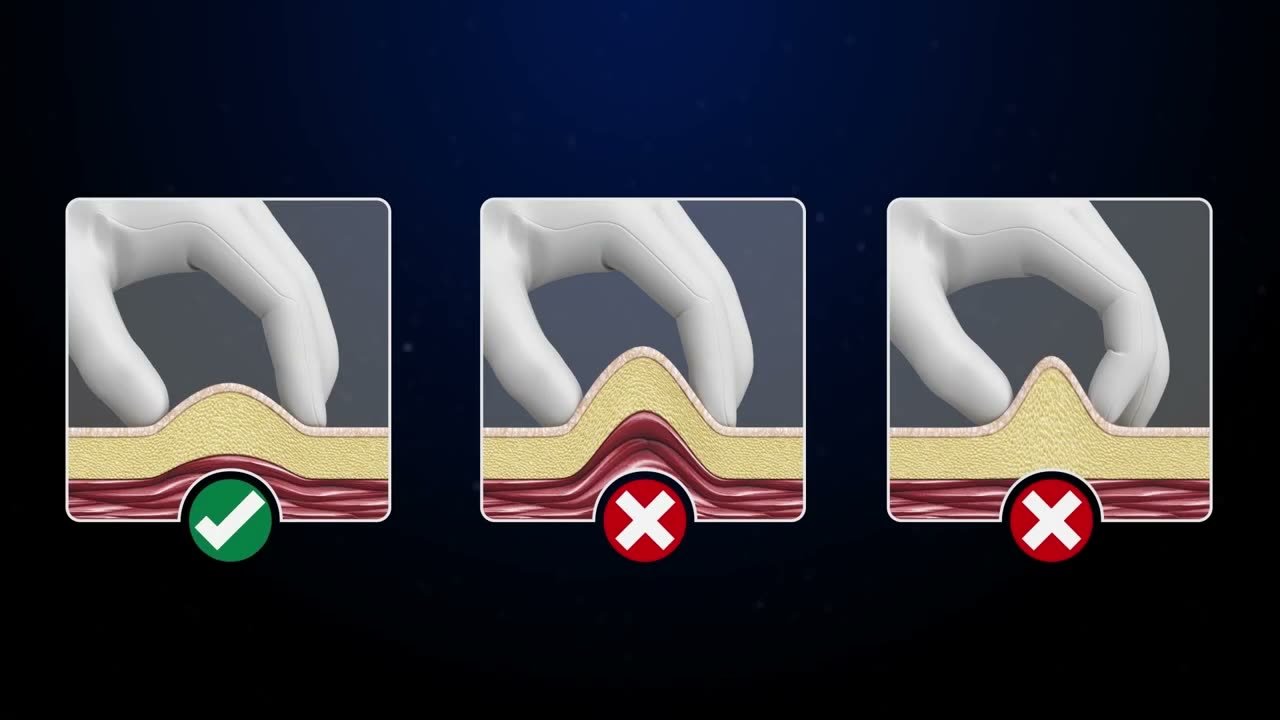
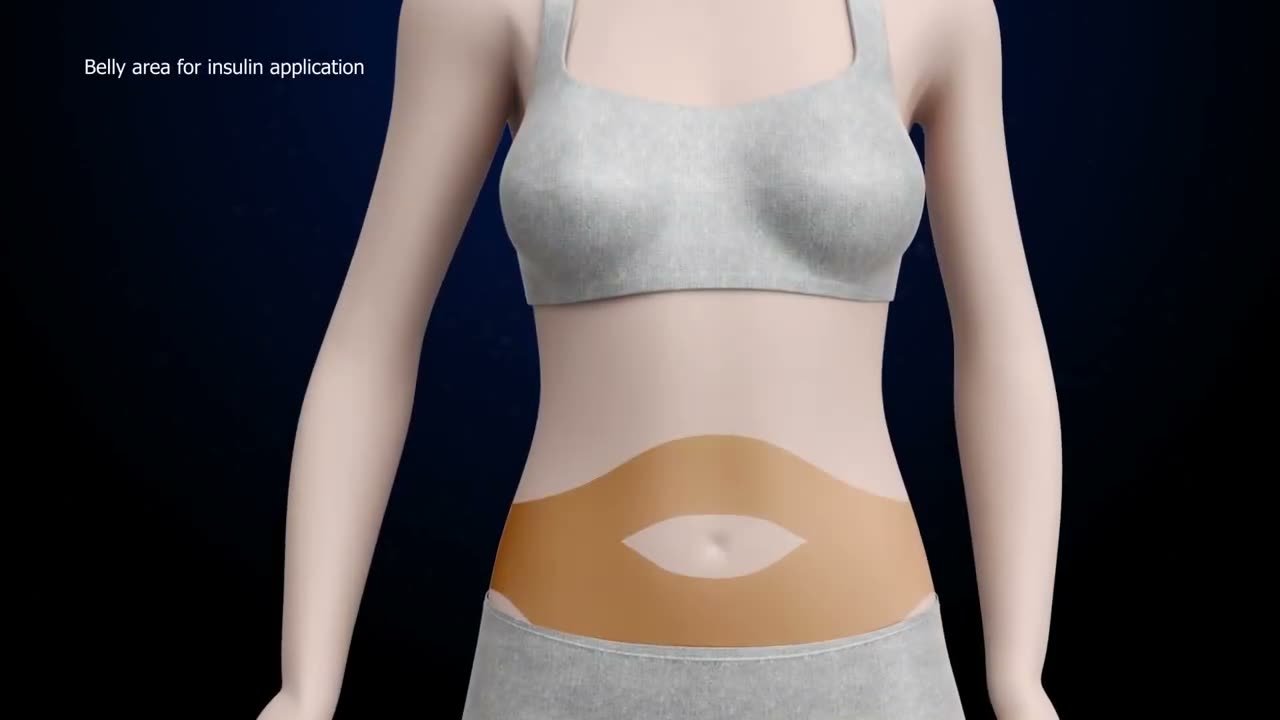
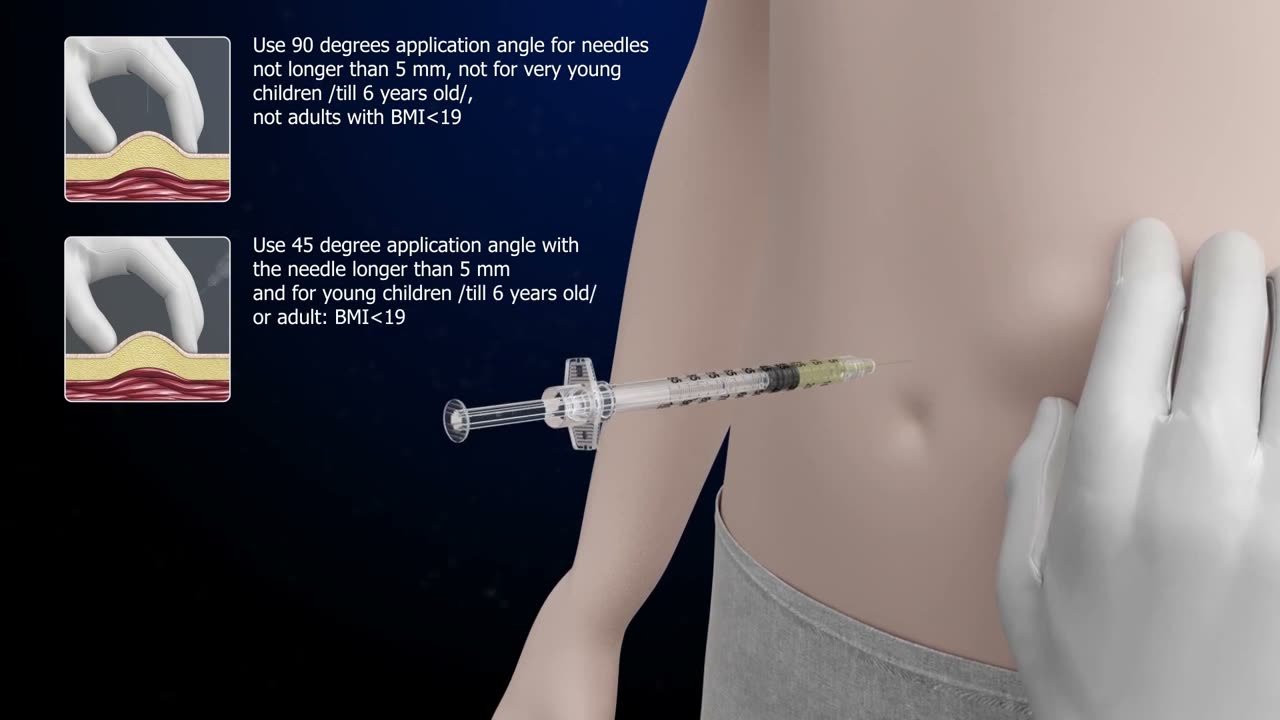
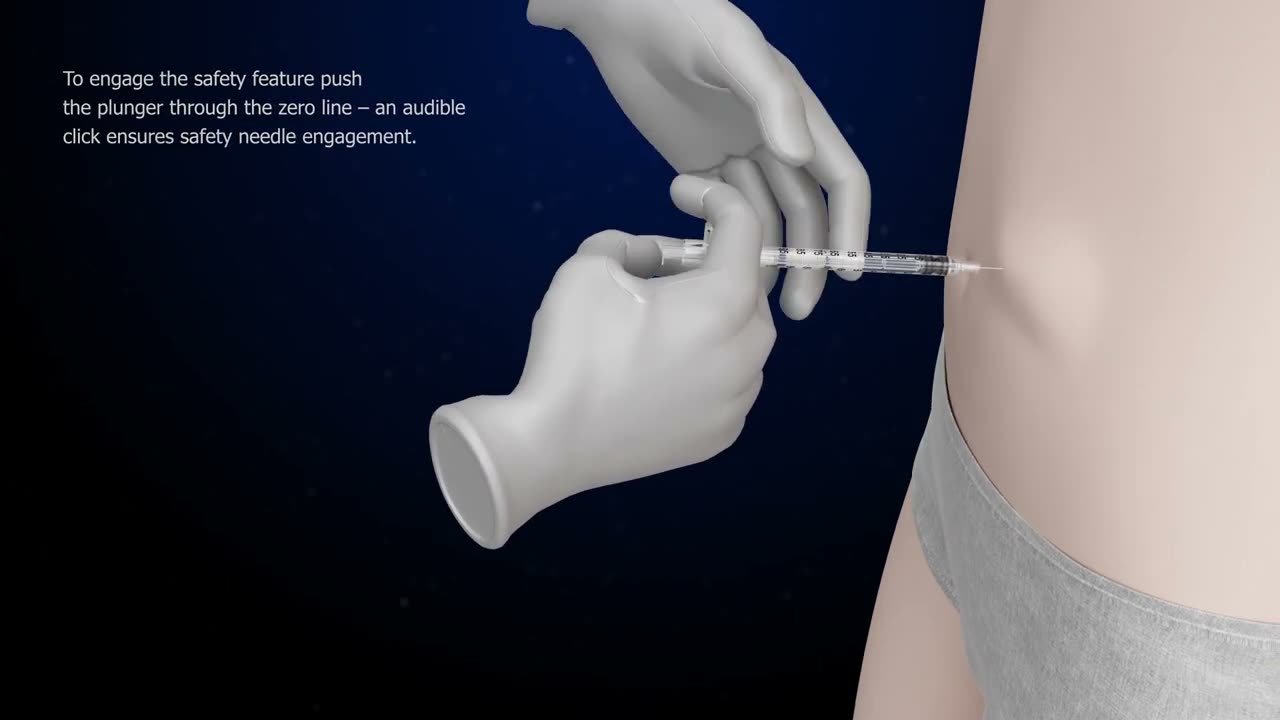
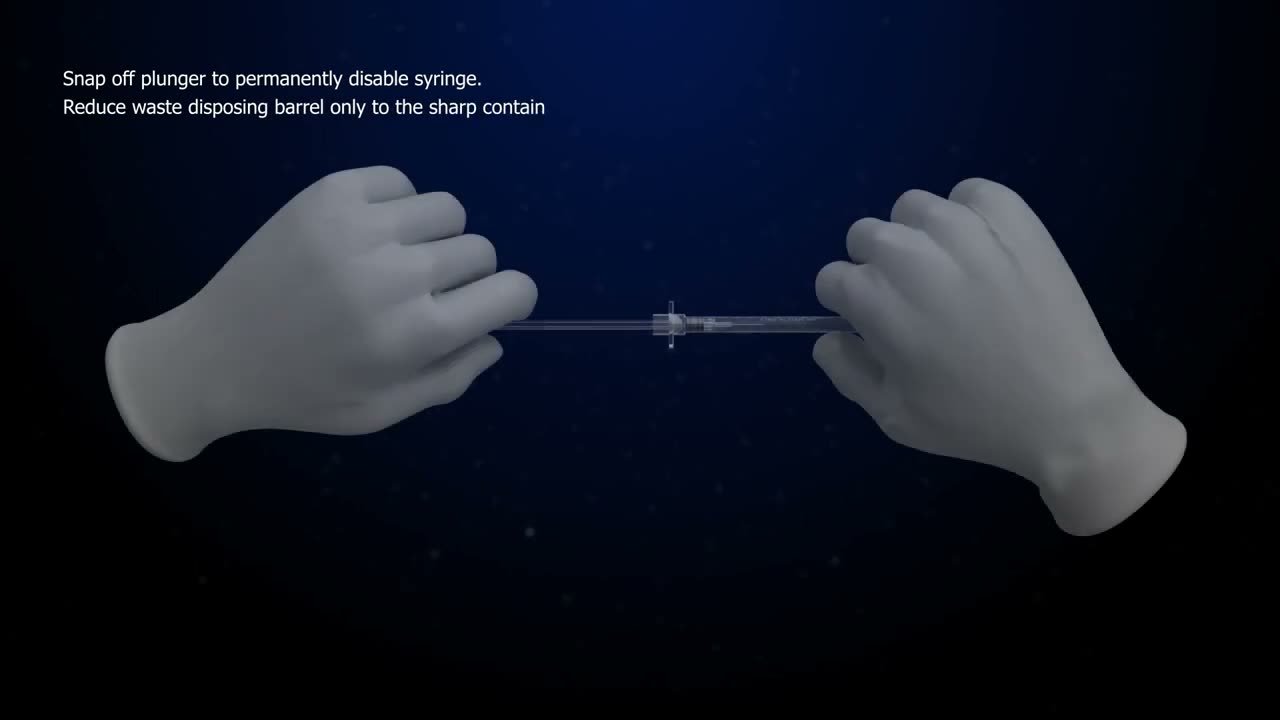
How to pinch the skin, at what angle to insert the needle, how to activate the safety feature and what to do with the used syringe. A picture settles doubts faster than the small print of a leaflet, and the code on the pack takes the user to the video in seconds.
Since 2025, EU rules allow electronic instructions for use for every medical device intended for professional users. The video does not replace those instructions, but it can sit right next to them, at the same address.
Frames from the Sol-Care insulin syringe animation we made for Sol-Millennium show what such a video can look like.
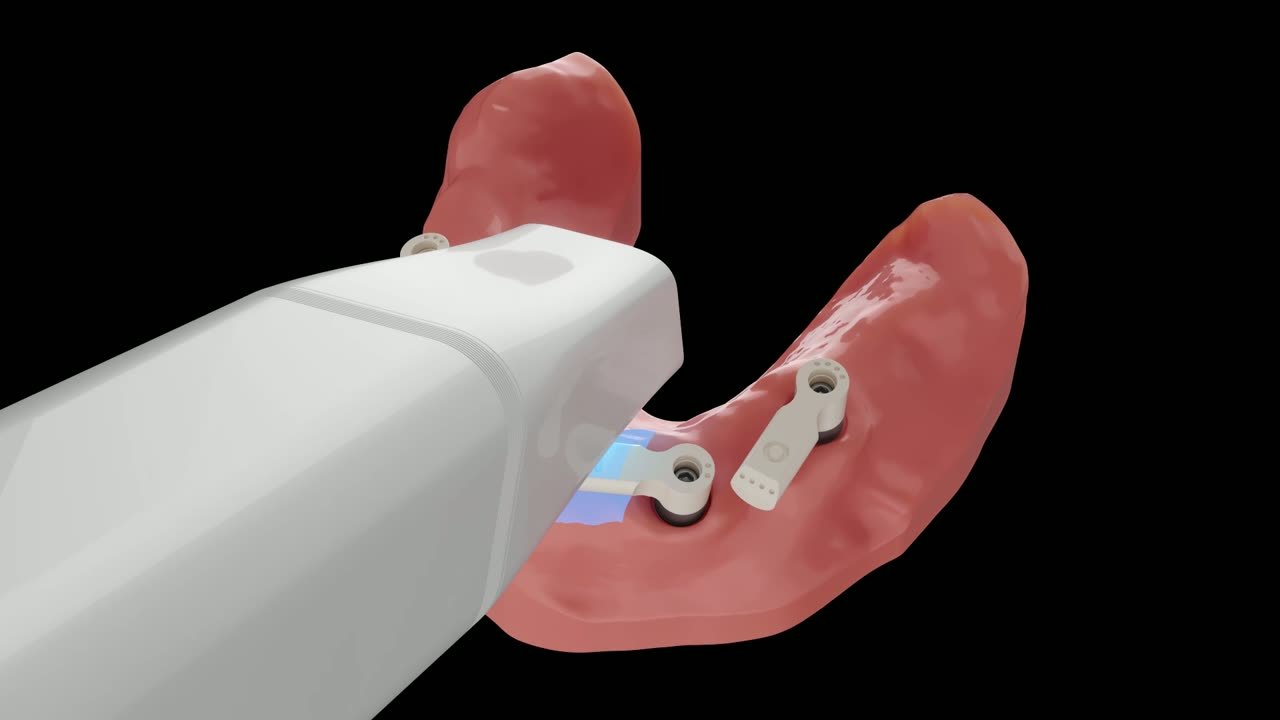
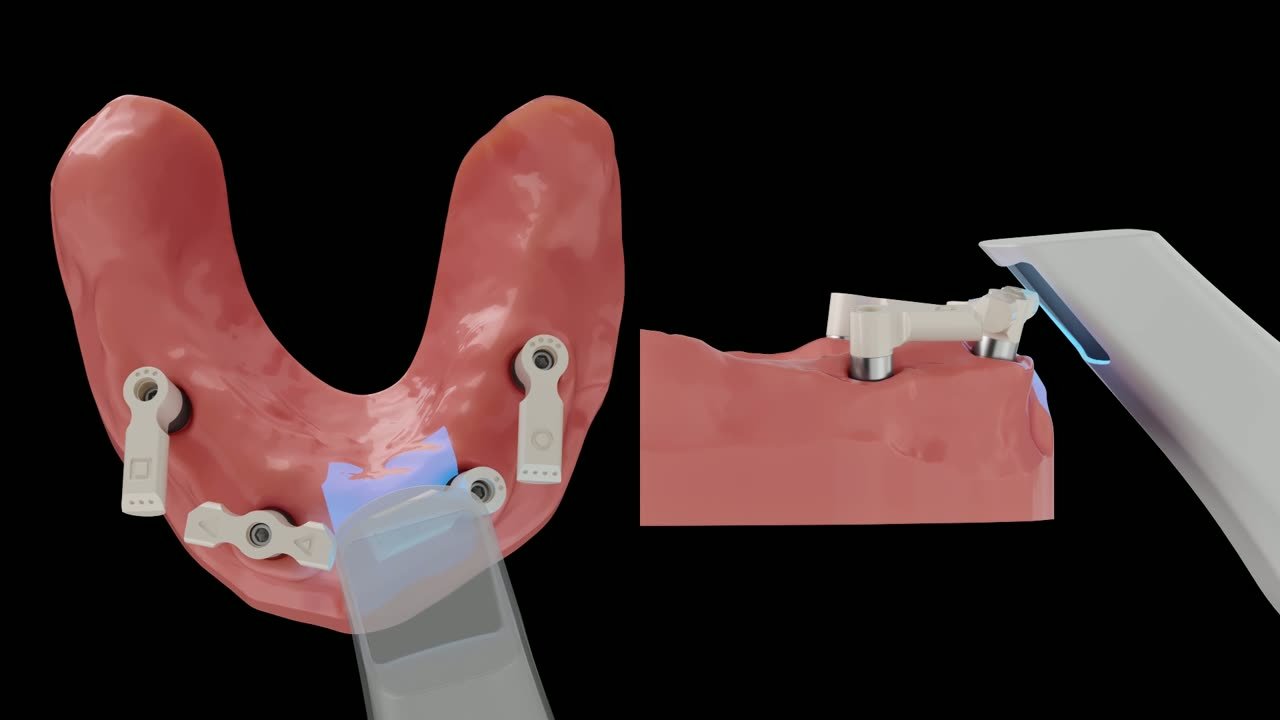
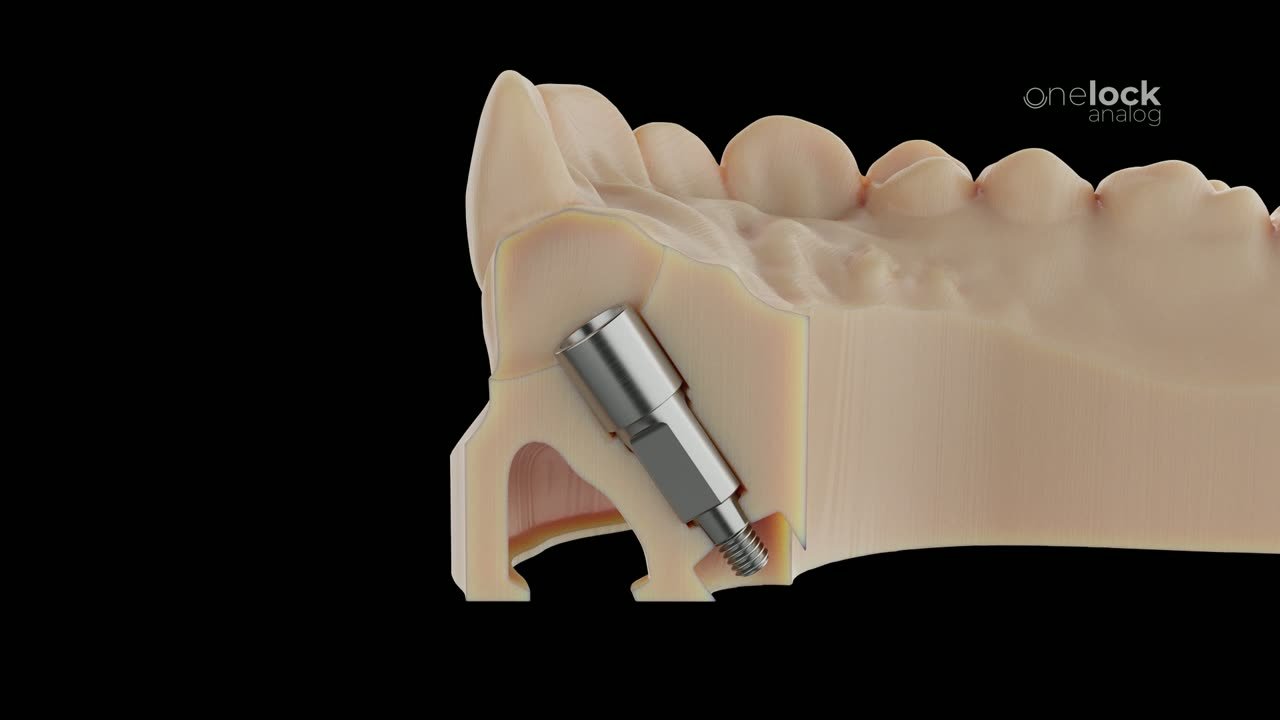
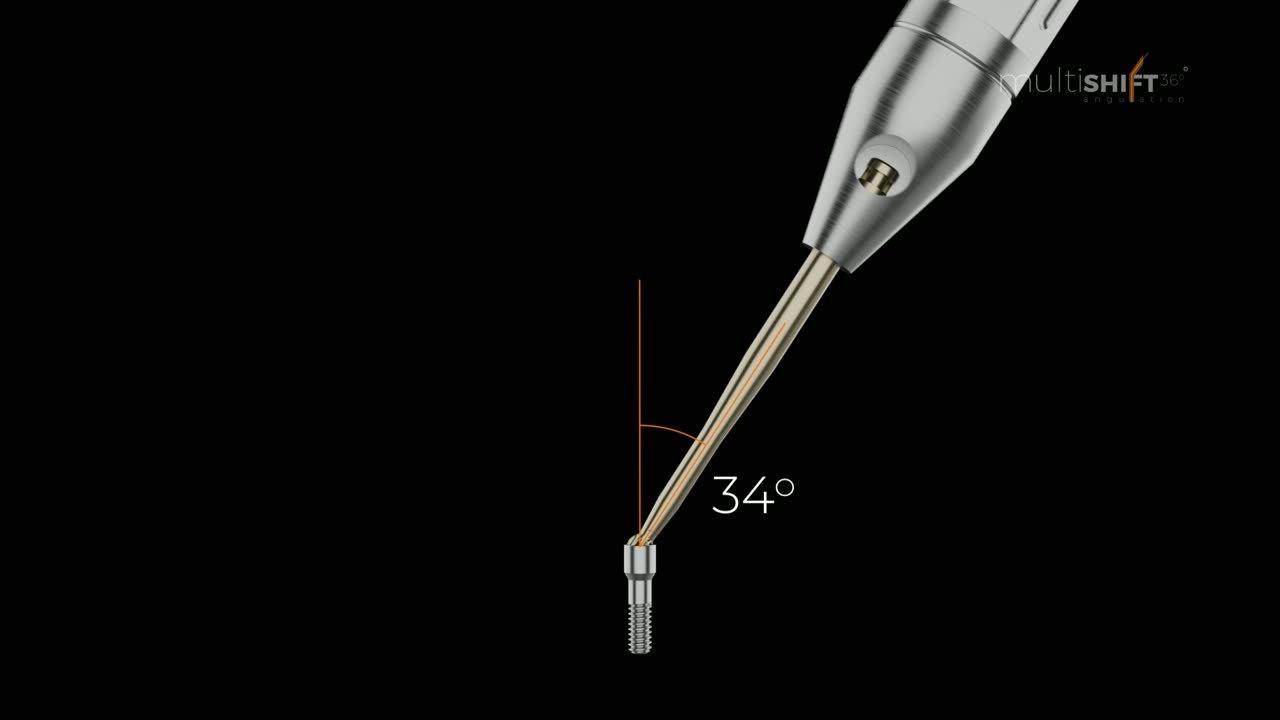
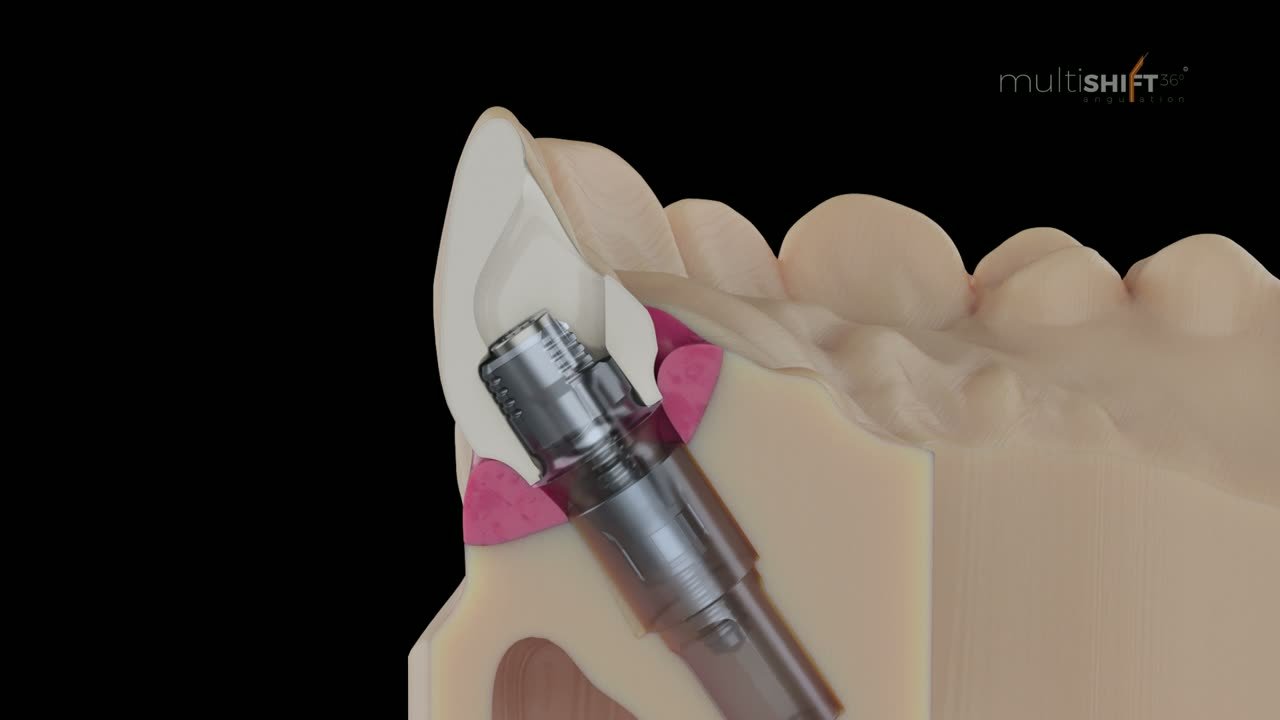
The order in which an arch is scanned, the angle of the screwdriver, the choice of system components. We split the animation into short modules that can sit in an e-learning platform or run on a tablet at the workstation. A scroll-controlled version, like the ones on this page, lets the viewer stop at any phase.
Project: Apollo Implant Components · SmartFlag and multiShift
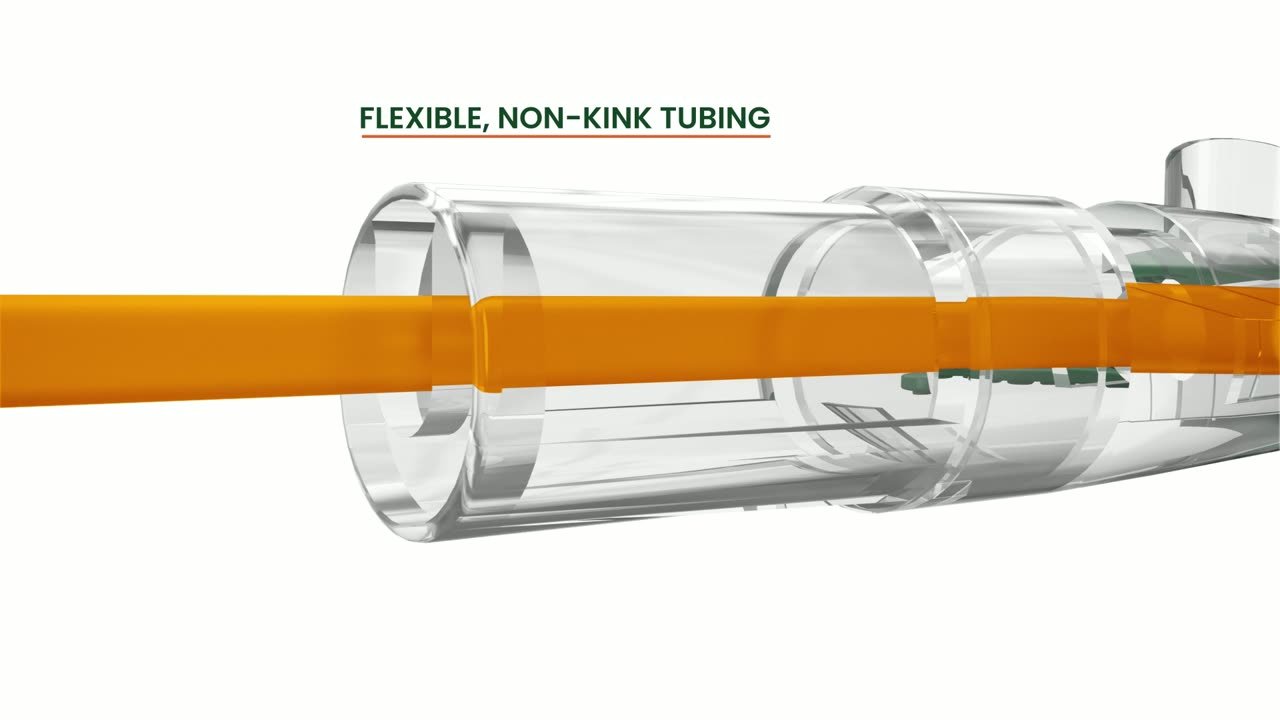
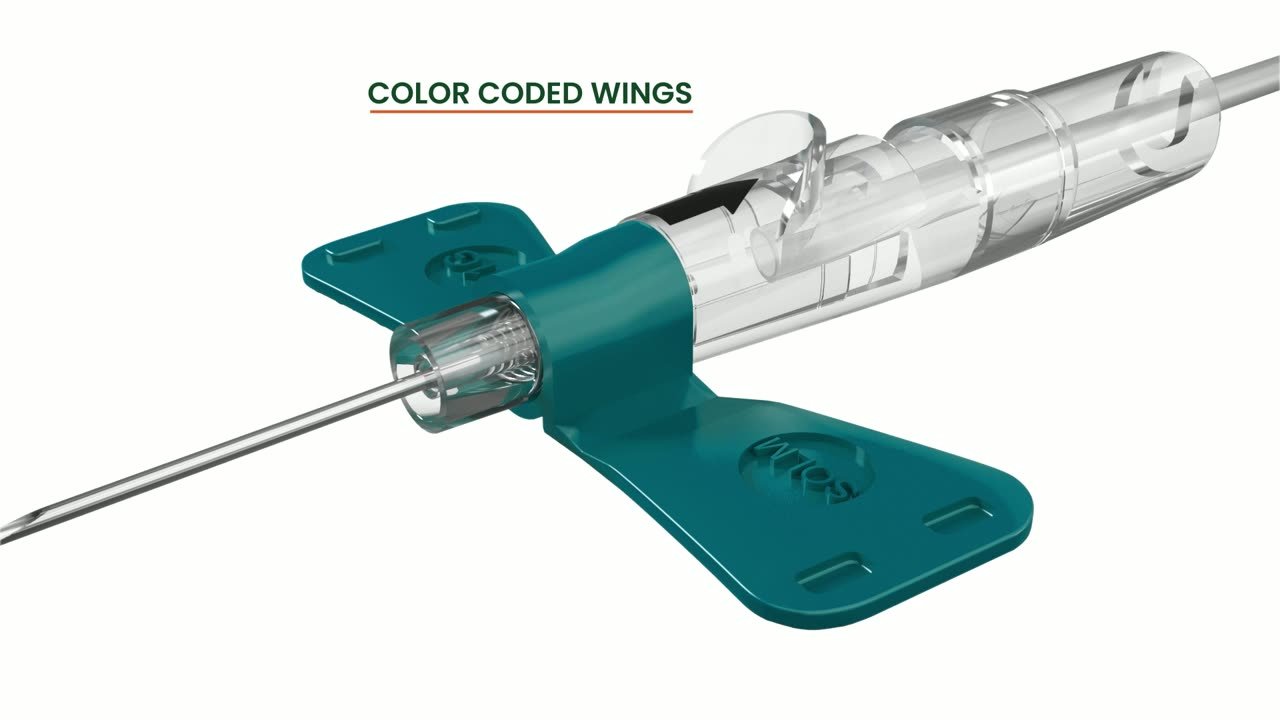
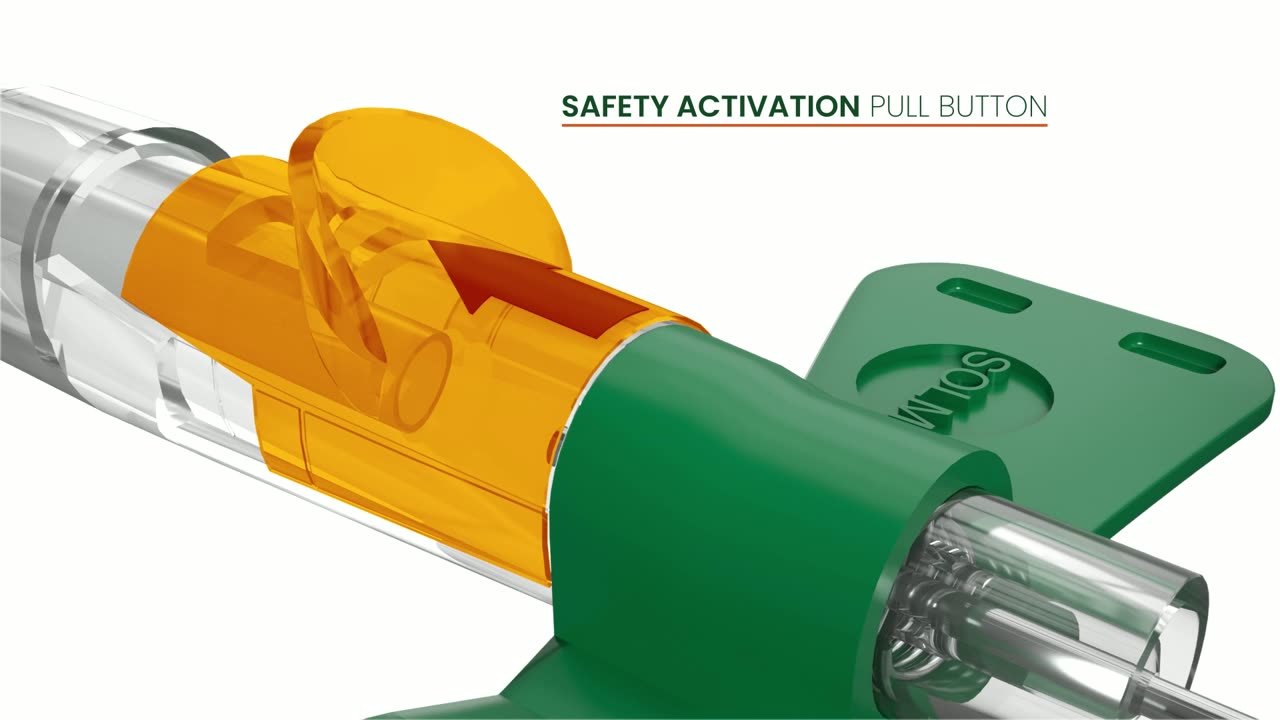
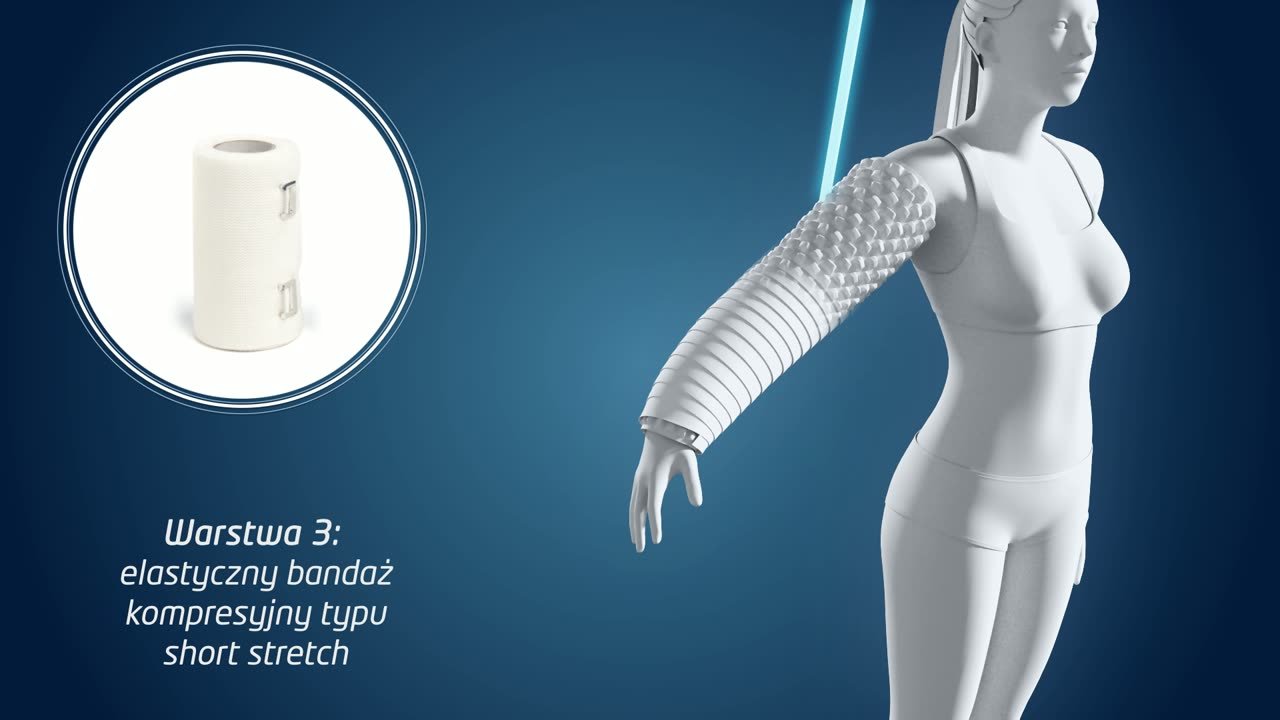
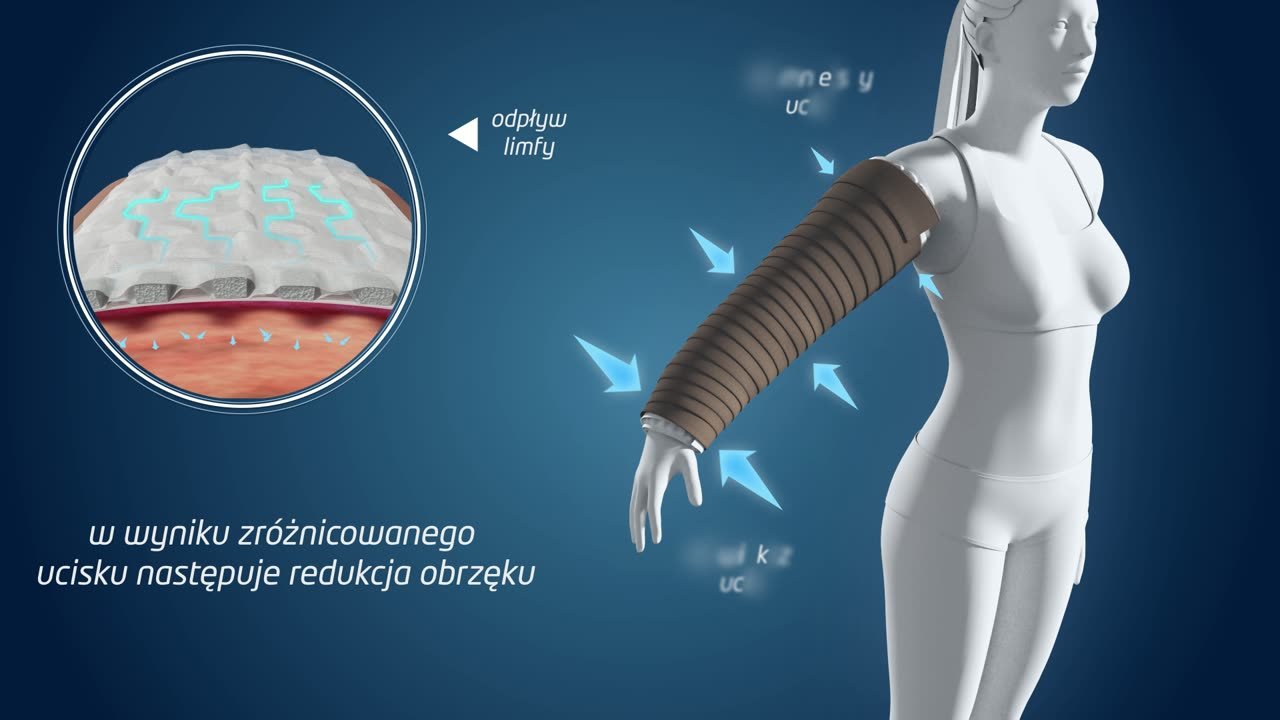
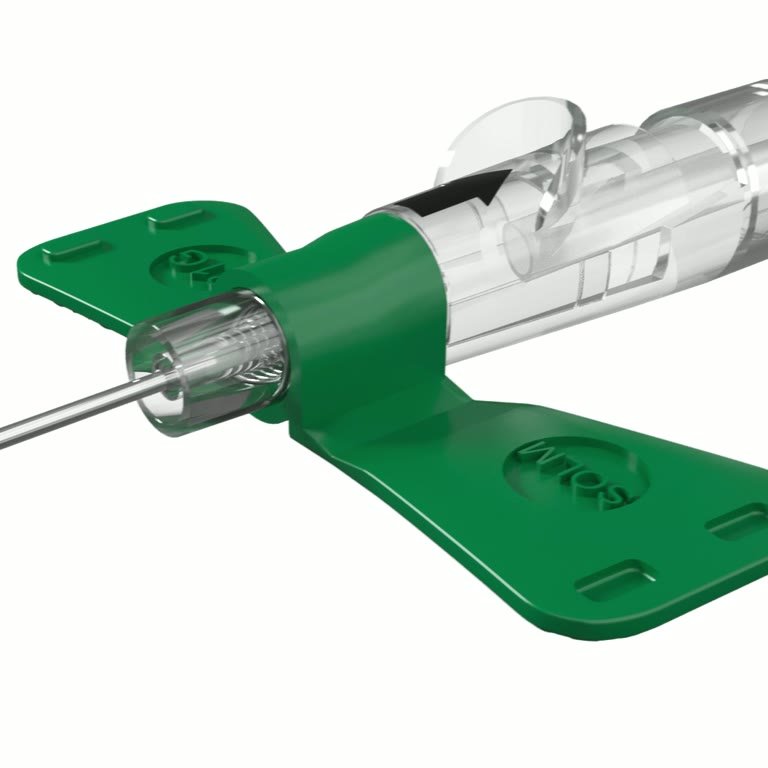
A short format for the product page, a campaign or LinkedIn: a close-up of the feature that sets the device apart, and the motion that explains it. Colour-coded wings, a safety button seen through the housing, bandage layers going on one by one. Every feature gets its own shot.
Projects: Sol-Millennium · Sol-Guard Pull-Button and Thuasne · Mobiderm
See how we approach advertising animation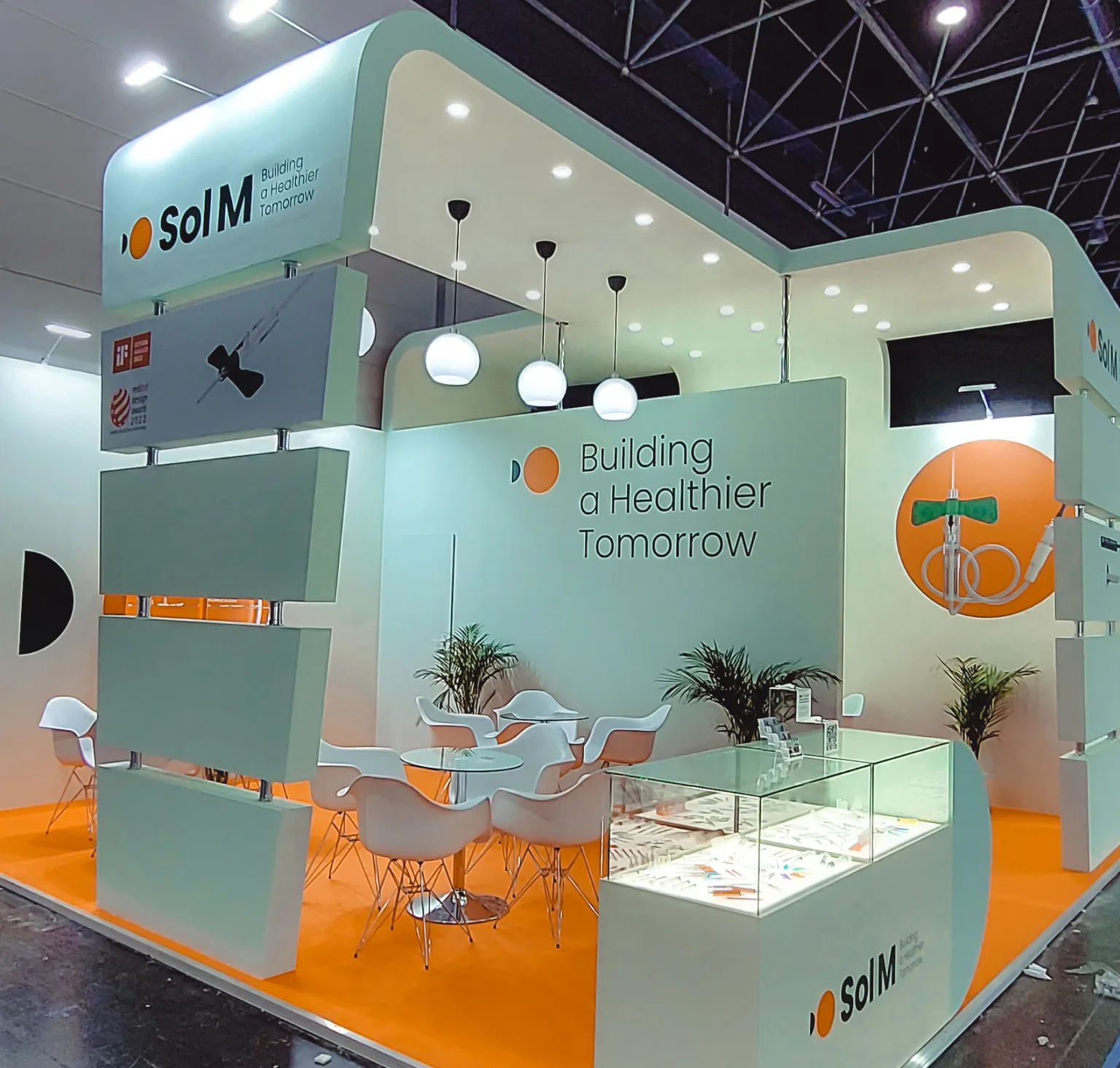
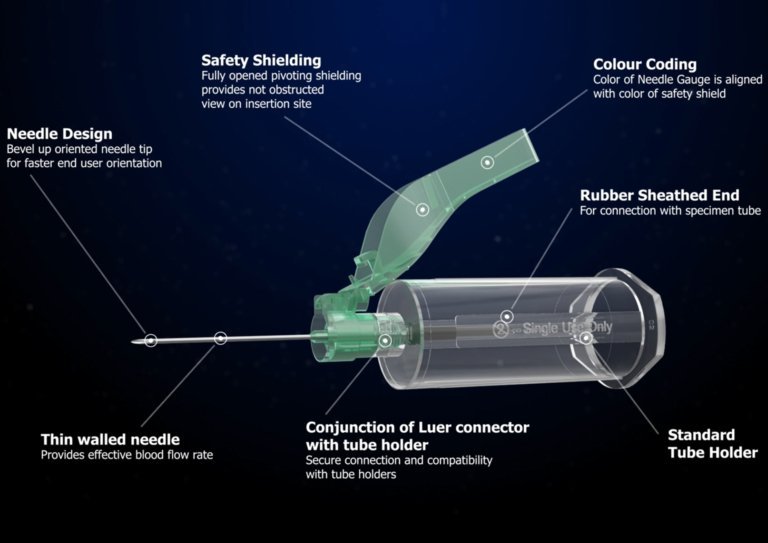
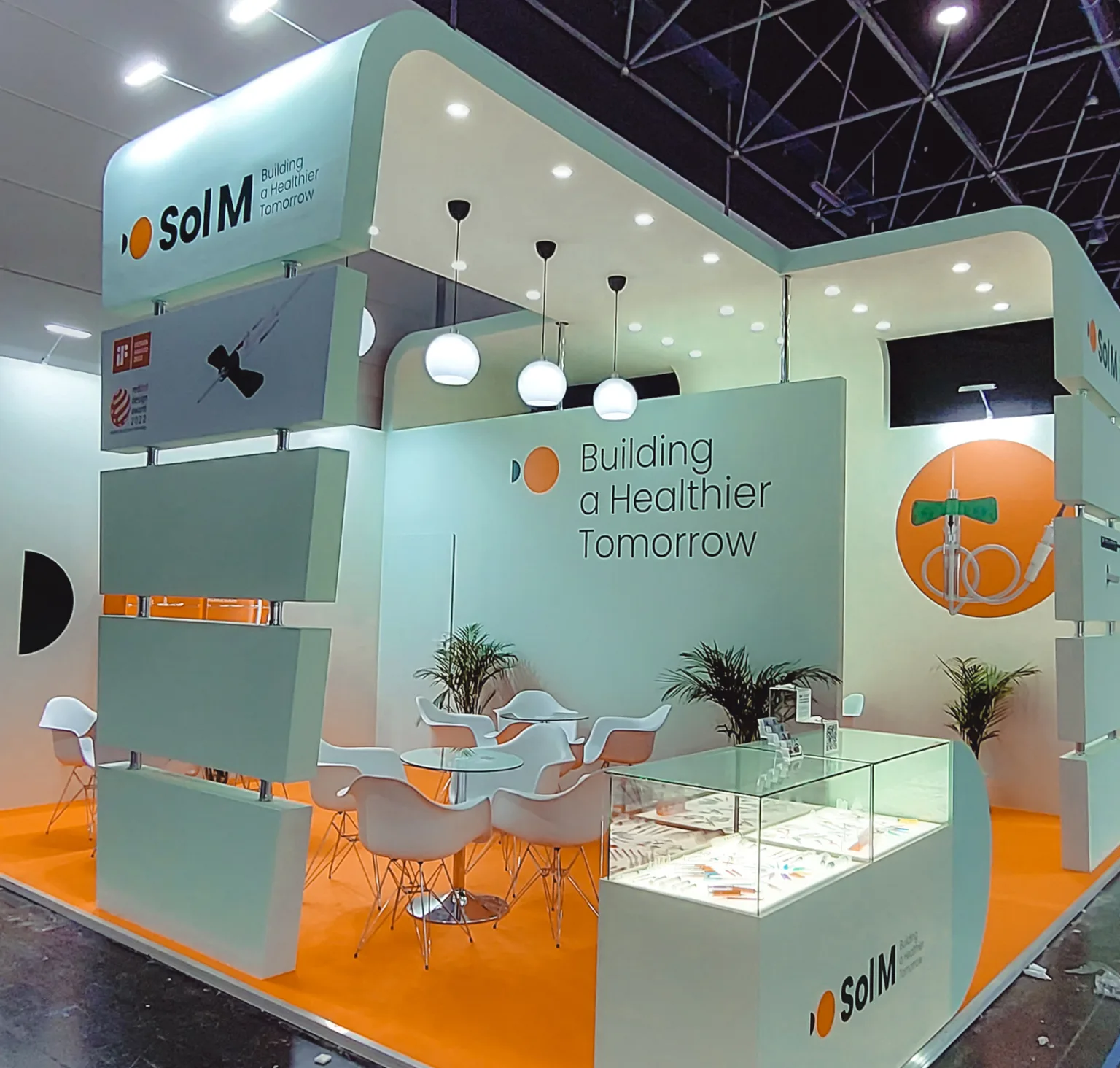
On a stand screen the animation runs on a loop without a voice-over; at a congress it plays behind the speaker. The same scene gives you renders for the stand walls, posters and leaflets, at a resolution ready for a large screen.
Project: Sol-Millennium · visualizations and animations on the trade show stand
See our product visualizationsA medical device manufacturer often has the CAD files long before there is a unit anyone could photograph. From documentation, a drawing or a sketch we build a 3D model and show the product the way a doctor, a technician or a patient will see it.
The model is built from the engineering documentation: needle, wings, tubing and holder in the proportions of the design. A new variant means changing a parameter, not booking another photo shoot.
A tube cap, the print on a label, the bevel of a needle. The virtual camera moves in as close as it needs to, and nothing goes out of focus.
In reality the needle retracts into its shield in a fraction of a second. In the animation the movement takes several seconds, and every phase is visible.
An implant in bone, a needle in tissue, the inside of a housing. 3D cross-sections show what you could not otherwise see without cutting it open.
Every step has its own shot and caption. The camera shows the hands from the side, from above or up close, depending on what needs to be seen.
Angle, direction and sequence of movements are clearly visible. Nobody has to consent to filming a procedure, and the scene can be repeated without a patient.
A scroll-controlled animation stops at any phase. Staff can return to a difficult moment as many times as they need.
Each of these animations was made for a different job: one trains staff, another sells the product at trade shows, another explains how a therapy works. Hover to see the motion and click to watch the full film. Why a procedure cannot simply be filmed is explained in our article on medical procedure animation.
Full project write-ups: medical device animations for Sol-Millennium · dental implant procedure for Almadent
A section of skin appears in space, turns and grows, so you can see its thickness and structure.
Epidermis, dermis, subcutaneous tissue, muscle and periosteum. Colour and texture tell them apart faster than a description.
The labels sit next to the layers, so a doctor, a nurse or a patient knows at once which layer is meant when the instructions describe a subcutaneous injection.
A 3D render isn’t only about looks - it’s a sales tool. Your product in a clinically clean setting, at any scale and from any angle. No prototype, no photo studio, ready before launch.


A short animation returns to where it started and plays on and on. It works in the header of a product page, on an online shop listing, in a LinkedIn post and on a screen at the stand: anywhere nobody turns the sound on or waits for a story.
Project: Apollo Implant Components · multiShift
The 360-degree sequence comes from the same model as the animation. On a product page or in an online shop, the customer looks at the device from every side and switches variants themselves. You don’t photograph each colour separately, and a new variant is one more render, not one more shoot.
We can prepare any product variant and any kind of motion the same way: a spin, an exploded view, a mechanism opening or a close-up on a detail. The product is always shown at its best.
Project: Sol-Millennium · safety needle in three colour versions
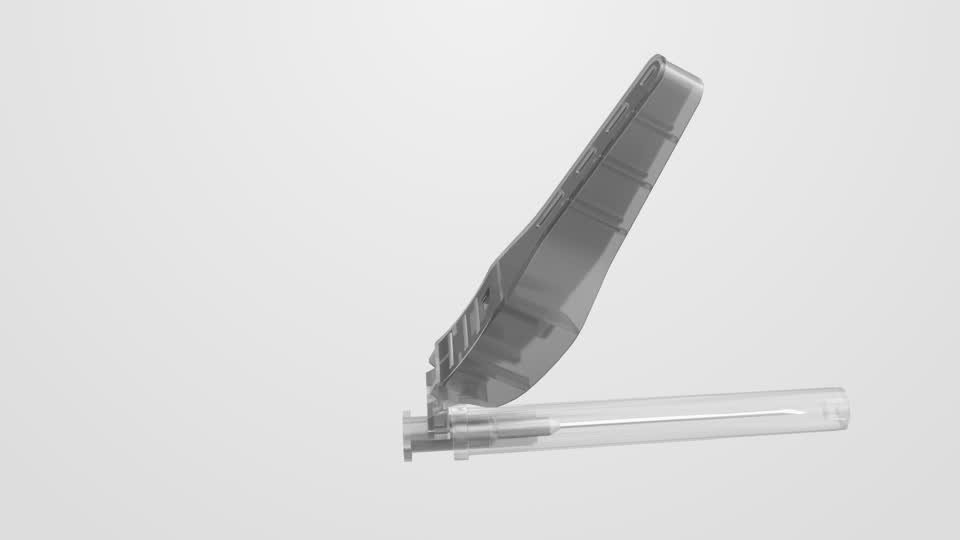
Close-ups of the features that set the product apart, in a clean, bright setting with nothing in the frame that doesn’t need to be there.
The housing turns transparent and you see what happens inside when the user presses the safety button.
The spring, the slide and the click: a moment that in reality lasts a fraction of a second.
Scroll-controlled animation, cross-sections, exploded views and interactive models work wherever a product operates on the inside, or too fast to photograph. We collected examples from other fields on a page of 3D animation examples across industries.
See examples from other industriesWe don’t need full design documentation. A description of the product, the procedure, or simply the goal is enough - we handle the rest.
You describe the product or the procedure. We agree what the material is for - a congress, the website, training, advertising. No CAD files? Not a problem: we work from documentation, photographs or technical descriptions.
We build the product geometry and send you a preview to approve - you correct proportions, colours and detail before any animation starts.
We create the motion, the lighting, the explanatory graphics and a voice-over if you need one. We render at the resolution that suits where the animation will play: on the website, in a presentation or on a stand screen. You get test frames or an animatic to approve.
You get a file ready for every channel: MP4 for the website, for trade shows, or a vertical cut for social. On request - PL, EN and DE versions from the same model, with no extra modelling.
CAD files, a sketch, or just an idea - that’s enough to start. Free quote within one working day.

Read more →
Read more →
Read more →
Read more →
Read more →
Read more →
The questions we hear most often before a project starts.
It depends on the complexity of the project, the length of the animation and how much 3D modelling is involved. A 60-90 second film showing how a device, implant or procedure works is quoted individually once we have seen the brief. If you have CAD files of the device, the quote is faster and more accurate. Quoting is free and takes 24 hours - write to us: biuro@modelight.pl
We work from the technical documentation and CAD files you provide. Before any animation, we build a storyboard describing every step of the procedure - you approve it before production begins. You get two rounds of revisions, so you can check accuracy with your own clinical or regulatory team.
Typically 4-8 weeks from storyboard approval. It depends on the length of the animation, the anatomical complexity, and how many revision rounds you need. We can move faster on urgent work - tell us your deadline (a trade show, a product launch) and we’ll check availability.
3D animation earns its place wherever a camera cannot go: inside a device, under the skin, into a blood vessel. The most common uses are congress presentations (Medica, CEDE), material for sales reps and KAMs, instructional films that complement the instructions for use (IFU), video for investor decks, and content for the website and social. One well-made film works for years, across several channels at once.
To quote, a description of the project and a rough length is enough. To produce, ideally: CAD files of the device (.step, .stp, .stl, .obj), the technical documentation, and a brief with the goal. If you don’t have CAD, we model from photographs, technical drawings or a sample of the product. Missing documentation has never stopped us starting. We explain the CAD handover in our guide on going from CAD to a photorealistic render.
Yes. We produce visual material for medical device and dental technology manufacturers - for marketing, trade shows and training. Factual content and regulatory compliance always sit with the client’s regulatory team. Clients include Sol-Millennium, Apollo Implant Components and Thuasne, across many markets.
No. The instructions for use are part of the device documentation, and the manufacturer is responsible for their content. An animation complements them: it shows in pictures the same steps the instructions describe in words. Since 2025, EU rules (Implementing Regulation 2025/1234) allow electronic instructions for use for every device intended for professional users, so the video can be published at the same address or behind the same code on the pack. For devices that patients also use, paper instructions are still required, and the video can be an addition to them.
Modelight is a B2B studio specialising in technical and medical animation - we don’t make music videos or ads where the product is just a backdrop. Every project is run with an understanding of how the device actually works, not just how it looks. 17 years in the industry, 130+ projects, clients in Poland and abroad.
