For Sol-Millennium, a global medical device manufacturer, we created 3D medical animations and product visualizations showing the safe use of syringes, needles and blood-collection systems in full cross-section. The challenge was explaining the exact moment a needle’s internal safety mechanism triggers — an event no camera can capture. We solved it with cross-section and transparency techniques: four 3D animations (including a safety insulin needle, a multi-sample blood collection needle, and a closed-system safety IV catheter) served at once as advertising material, clinical training content for specialists, and trade show graphics.


Client: SOL-Millennium — global manufacturer and distributor of medical devices
Scope: 3D modeling, animation, advertising visualization, motion design, explainer video
Industry: Medtech / medical devices — procedural accessories, diagnostics, blood collection
Technique: Cross-section and transparency — visualizing mechanisms invisible to camera
Application: Advertising · clinical staff training · industry trade shows
3D MEDICAL ANIMATIONS | Sol Millenium
Using 3D animation allows you to explain procedures or demonstrate the correct use of specialized medical devices in a clear and engaging way. It’s often challenging to present complex processes through photos or traditional instructional videos. Sol-Millenium, a manufacturer of medical devices, has effectively incorporated 3D creation and animation into its educational and promotional efforts. The result? Promotional animations and explainer videos that clearly demonstrate the safe use of syringes and surgical needles and its benefits.
With 3D animation, you can visualize processes in the finest detail. Computer graphics let you explore areas inaccessible to a traditional camera, showcase processes in slow motion, cross-sections, or transparency views. Close-ups in 3D animation highlight every detail and product advantage.
This way, you can create both promotional visualizations and instructional animations or explainer videos that present medical products in a clear and accessible way for the viewer.

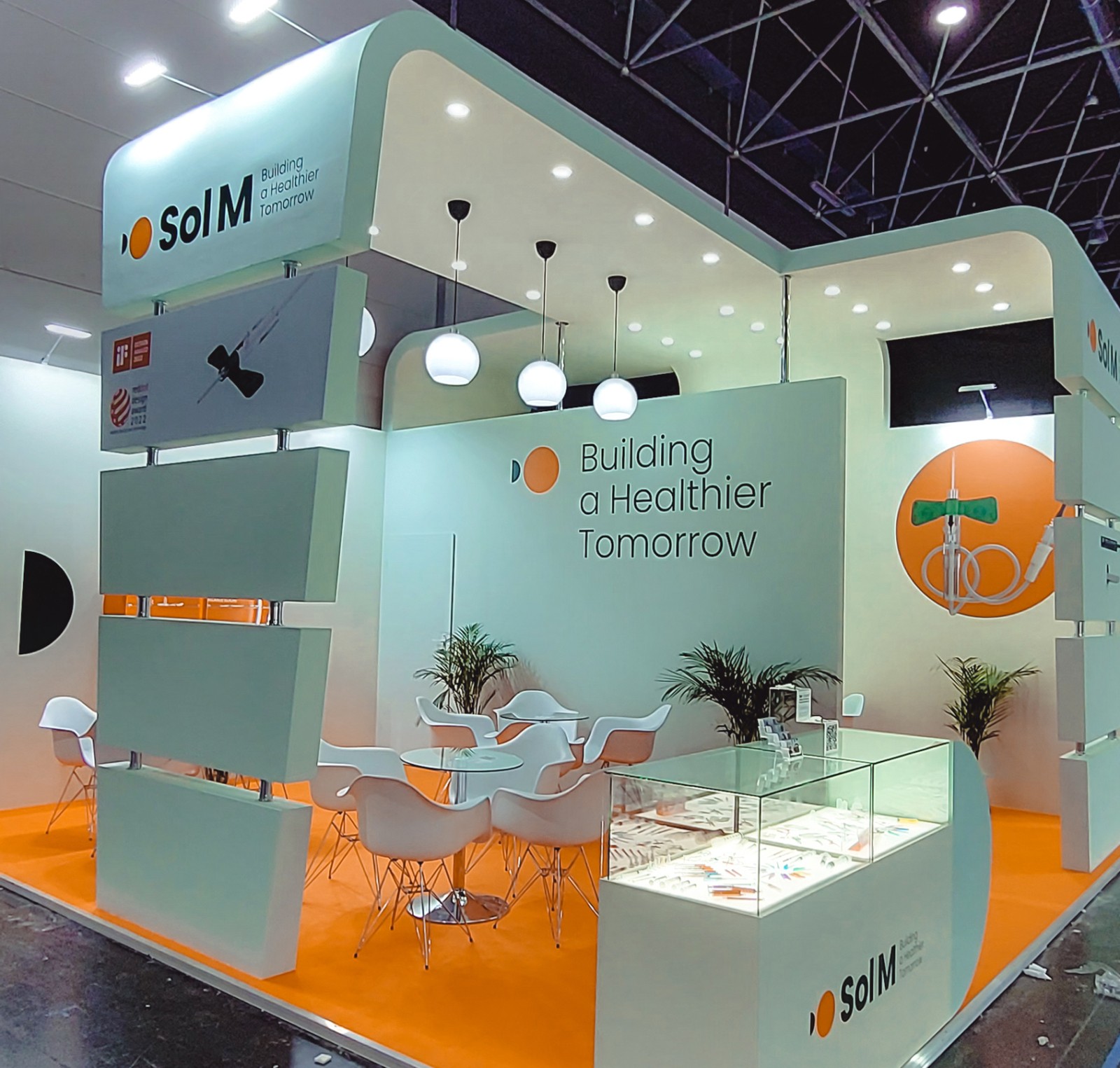
3D models and their visualizations are also a great asset for industry trade shows. High-resolution product visualizations work perfectly for large-format prints on booth walls or as promotional posters. By understanding the layout of your trade show space, we can arrange the product in 3D to create a cohesive presentation and a visually appealing booth design.


—
Some processes and details related to the use of medical accessories can be difficult to understand. In such cases, 3D animation and computer graphics are extremely helpful. This way You can show medical procedures in detail and see what is hidden for traditional cameras.
With animated video you can make explainer videos that help clinical professionals visualize how to perform procedures, how to activate devices, and understand their key benefits.

Challenge: how to show what a camera can’t
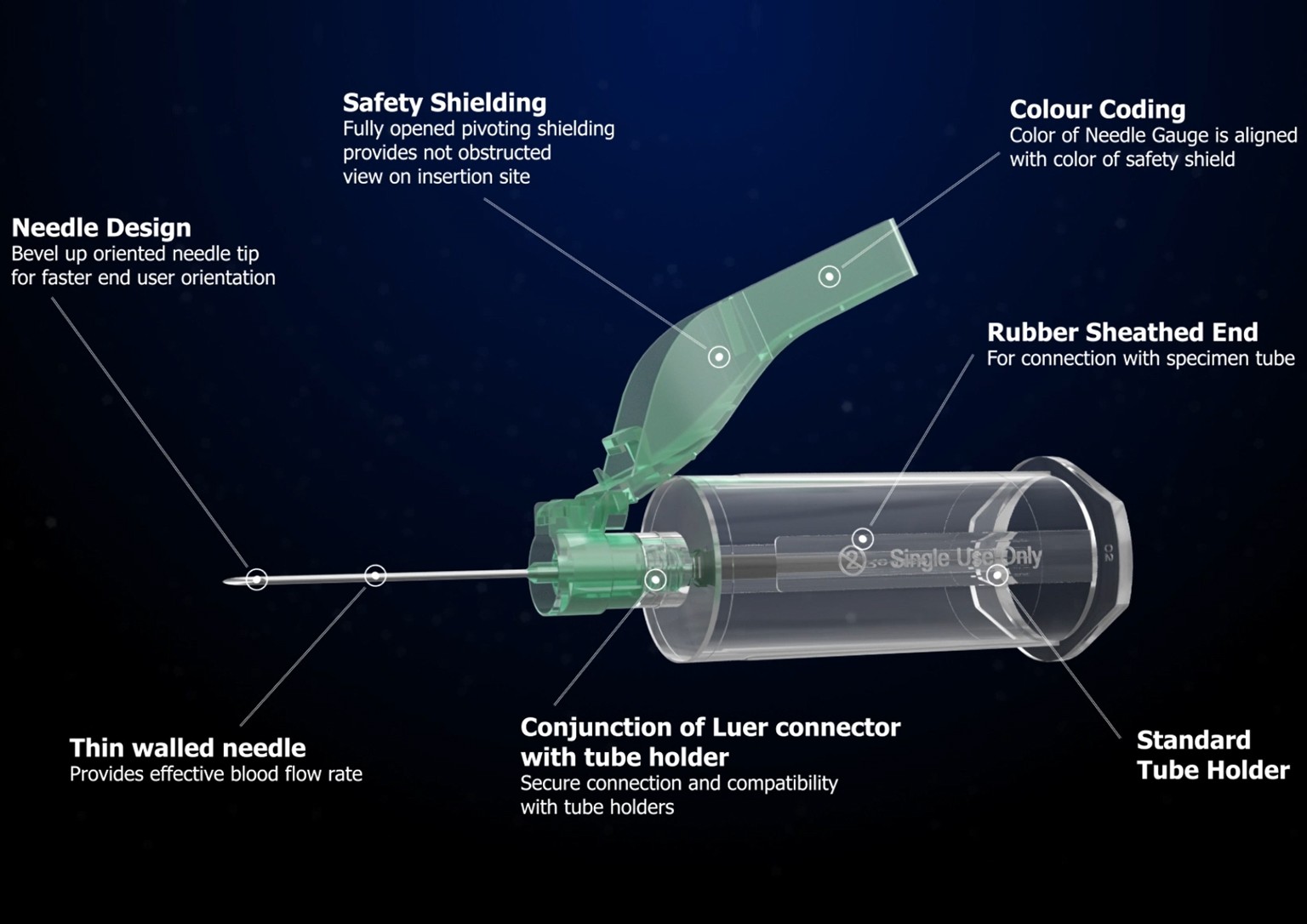
How do you explain the safe use of a syringe and surgical needle — clearly and convincingly, for both medical staff and patients — when the key moment, the safety mechanism triggering inside the needle, happens somewhere no camera can reach? Sol-Millennium needed materials explaining how their procedural accessories work without a real procedure, without blood, and without risk to anyone involved in filming.
Solution: transparency, cross-section, and one production for three uses
We built exactly where the camera gives up. Material transparency and layer-by-layer cross-sections let us show the safety mechanism at the exact moment it triggers — in close-up and slow motion, in a way no real footage could capture as clearly.
The same set of animations and visuals served as advertising material, clinical training content, and trade show graphics at once — one production, three uses, without separate sessions for each channel. We take a similar approach across other medtech projects — for example, the implant visualizations for Almadent, where 3D helps explain a dental procedure at an equally camera-inaccessible moment. See both in our 3D animation examples from 9 fields.
What the client gained
- Showing what no camera could capture — the needle-retraction safety mechanism triggering, in cross-section and slow motion.
- Four 3D animations covering the full portfolio of safety accessories — from the safety insulin needle to the closed IV catheter system.
- One production, three channels — advertising, clinical staff training, and trade show materials without separate sessions.
- A consistent visual standard across all sales and training materials.
- Trade-show-ready materials — high-resolution visuals for large-format prints and posters.
- Lower risk of misinterpreting proper use — which, for medical equipment, matters well beyond marketing.
Frequently asked questions
Can 3D animation replace real footage of a medical procedure?
In many cases yes, and sometimes it’s the only option available. The moment the safety mechanism inside a syringe triggers — the spring-loaded needle retraction after use — happens in a fraction of a second, in a place no camera can reach. 3D animation lets us stretch that moment out in time, show it in cross-section from any angle, without the limits of physical filming equipment or the risk of working with real biological material. For many medical device manufacturers, it’s the only way to show exactly what really happens inside the device.
How long does it take to produce a 3D medical animation?
It mainly depends on the complexity of the mechanism and the number of product variants to show. A single instructional animation, like the ones for Sol-Millennium’s procedural accessories, usually takes a few weeks from receiving technical documentation (ideally CAD files) to finished material. Timelines extend when a production covers several use variants at once — separate versions for marketing, staff training, and trade show materials.
Do we need CAD files to commission this kind of animation?
It’s definitely the best starting point, though not the only option. Working from a client’s technical documentation — CAD files, engineering drawings — means the 3D model is a millimeter-accurate reproduction of the real product, not an approximation based on photos or a description. That matters especially in the medical field, where the precision of showing a safety mechanism isn’t a matter of aesthetics — it’s a matter of the material’s credibility.
Can the same material be used for both marketing and staff training?
Yes — that’s one of the main practical advantages of this kind of production, and exactly how we built it for Sol-Millennium. The same set of 3D models and animations covers advertising material to promote the product, an instructional animation explaining correct use to medical staff, and graphics for trade show booths — without organizing a separate production for each purpose. That’s a real saving in time and budget while keeping a consistent visual standard.
Does a 3D medical animation need additional approvals before publishing?
It depends on the target market and the specific use of the material — purely marketing content has different requirements than material treated as medical documentation or a device instruction. We always recommend consulting the client’s regulatory/compliance department before publishing, especially in markets with strict regulations for medical devices. On our end, responsibility covers the production side and the technical accuracy of the representation.


