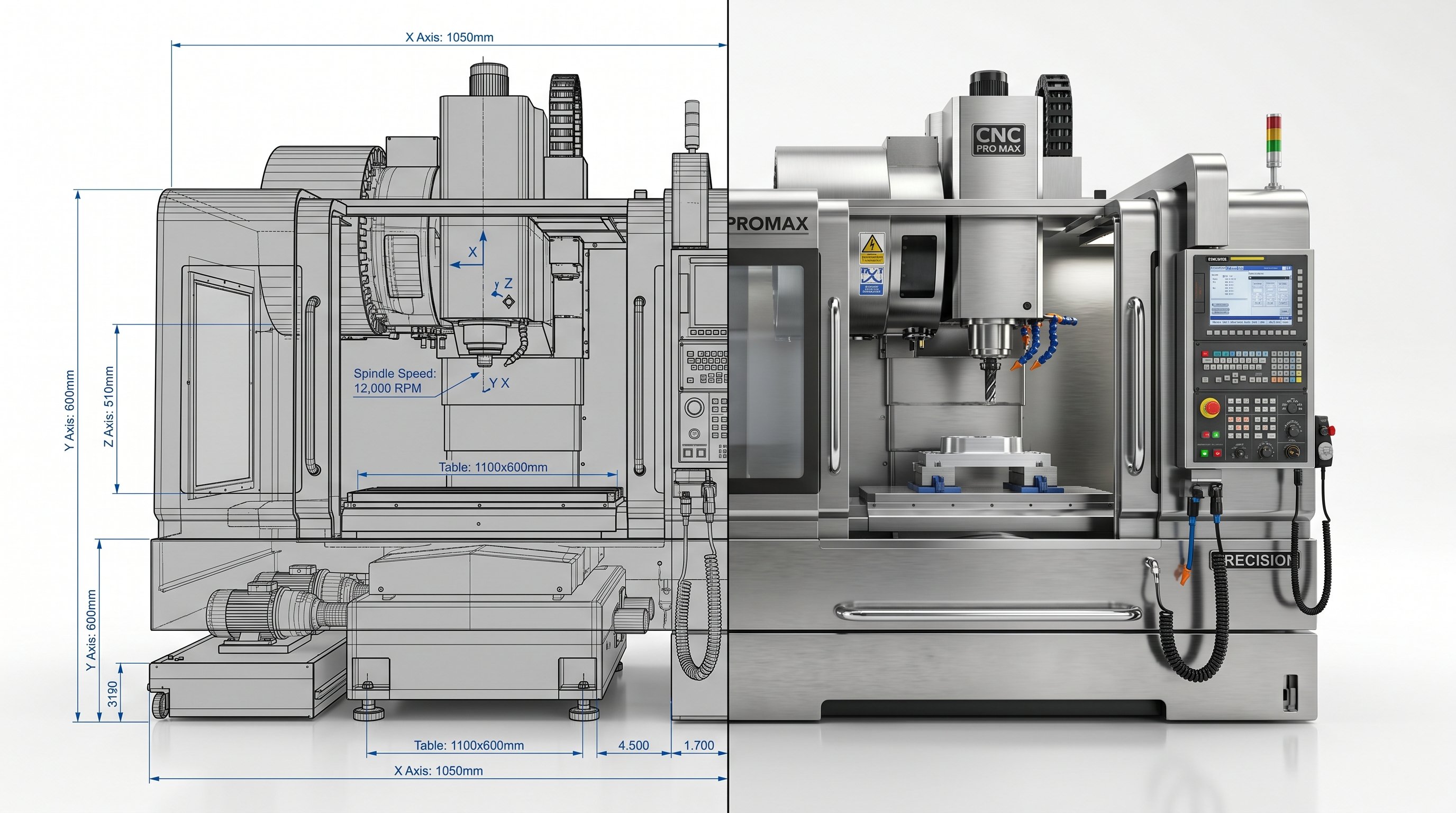

Technical 3D animation shows how a machine, device or industrial process actually works — the parts, the sequence, the flow — built straight from your CAD data. It reaches the people a spec sheet never does: buyers, distributors, trainees and the engineers who sign off.
Where a camera can’t get inside a running machine, an animation can. That is the point of a tech animation — it shows the mechanism, not just the housing.
3D technical animation — where it earns its place
In technical fields the product’s value is inside it. The machine runs behind a guard; the process happens in a sealed chamber; the assembly matters more than the casing. A technical animation opens all of that up — semi-transparent views, cross-sections, exploded layouts and slow motion, as in the air spring animation for Tip-Topol, where the suspension works under a moving truck.
It works because it is built from real geometry. When we model from CAD, the motion matches the mechanism — an engineer watching it recognises their own machine, and that is what earns trust in a B2B sale.
Process animation — complexity made legible
We explain how complex systems work — construction, sequence, and the logic a client needs to grasp before they buy. One animation replaces pages of description and a diagram nobody reads.
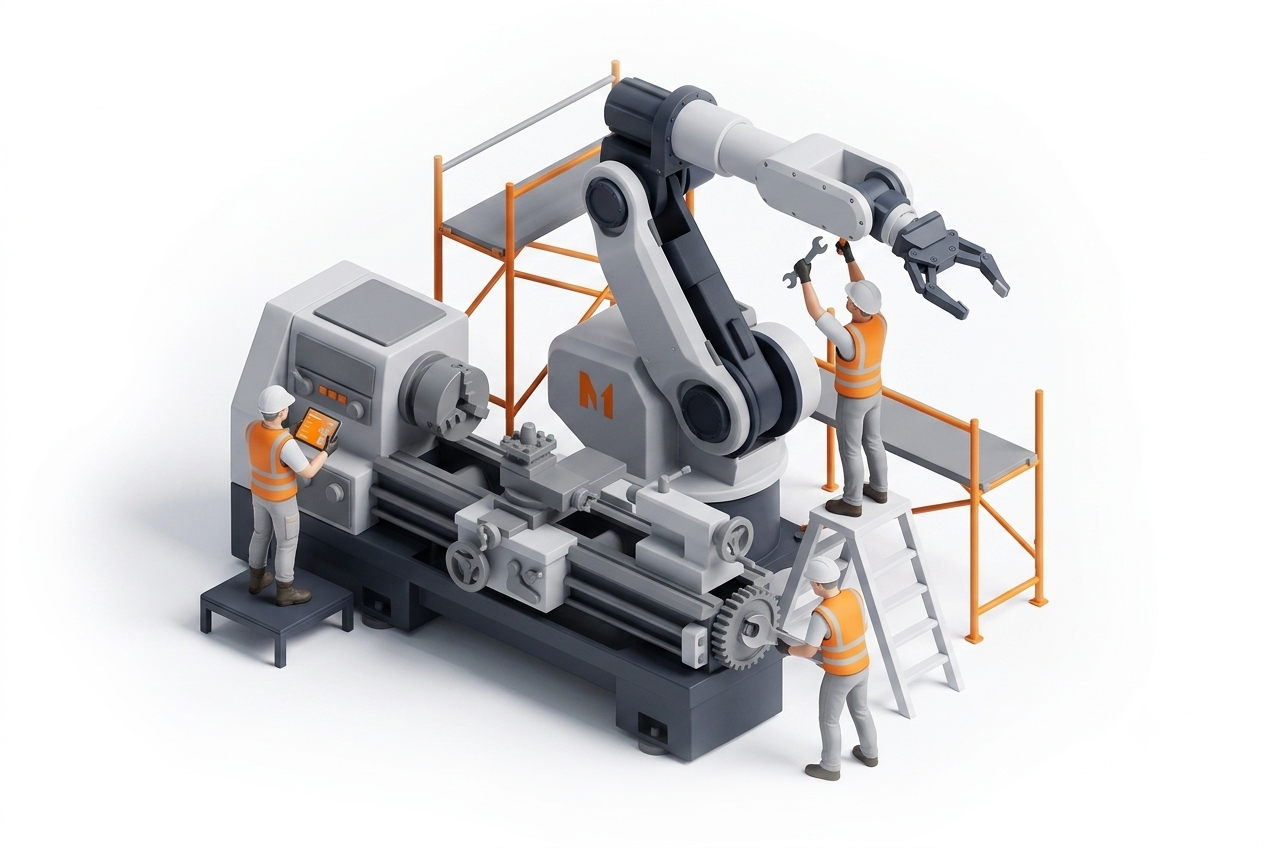
Assembly, operation, maintenance, safety procedures: each becomes a short, clear sequence. The same asset then works in sales, at trade shows, in onboarding and in support — though which format earns its keep depends on the stage of the sale.
What a process animation typically shows:
- Sequence — what happens first, what follows, and why the order matters.
- Flow — air, fluid, gas, heat or material moving through the system.
- Interaction — how components work together under load, not as a static exploded diagram.
- Failure and safety — what goes wrong when a step is skipped, shown without risking a real machine.
- Scale — from a single tool tip to a full production hall, in one continuous shot.
See it applied to real machines: Pokolm CNC tooling, Hexonic heat exchangers and our CNC animation landing page, or browse 3D animation examples from 9 engineering fields.
Production and process animation — explain how your product works
In a production or process animation you show the build and operation of machinery, the principle behind a technology, or the path of a medium through a system. For an HVAC exploded view we take the unit apart on screen — showing the airflow and heat exchange a static render leaves invisible.
It is the argument that shortens a technical sale: the buyer sees why your solution is better, not just that it exists.
Industries where this does the heaviest lifting: CNC machining and cutting tools · HVAC — heat exchangers, fans, recuperators · medical devices and dental technology · industrial automation and robotics · automotive components · construction materials with hidden technology.
If the value of your product is inside it, or moves too fast or too small to film, this is the format that shows it. Related: technical visualizations for stills, cross-sections for cutaway views.

Let`s talk
Let us know what you do, we’d love to talk about ideas on how to show it in an interesting way in 3D.
Frequently asked questions
What is a technical 3D animation?
It shows how a machine, device or process actually works — parts, sequence and flow — built from CAD data so the motion matches the real mechanism.
What can it show that a video can't?
The inside of a running machine. Cameras can’t reach a sealed chamber or a working assembly; an animation uses semi-transparent views, cross-sections, exploded layouts and slow motion to show exactly that.
What do you need to make one?
CAD files (STEP, IGES) give the most accurate result. Where there is no CAD, technical drawings, sketches or photos let us rebuild the model.
Which industries is it for?
CNC machines and tooling, HVAC, medical devices, automotive components and industrial automation — any product whose operation is hard to see from the outside.
How is it different from a product or advertising animation?
A technical animation prioritises accuracy and explanation over styling — it is built to make an engineer or a buyer understand how something works, not just to look good.
Can you animate a process, not just a product?
Yes. Assembly, operation, maintenance, a medium moving through a system, a production line — process animations are a core part of what we do.
Can we reuse the animation for training and trade shows?
Yes. One asset works across sales, trade-show screens, onboarding and support, and it can be cut into shorter clips for each.
How much does a technical animation cost?
Every project is quoted individually — it depends on complexity, length and whether CAD data is available. Use the calculator on our 3D page for a rough estimate; we return a firm quote within 24 hours.
Keep reading
How a 3D animation is made
From CAD and storyboard to the finished technical animation, step by step.