
Multilayer compression bandaging animation - Thuasne Mobiderm

A medical device that works under the skin is hard to sell with a photo of the packaging. A 3D animation shows the order of application, the correct stretch and what happens in the tissue - with no patient on set and no clinic footage.

For Thuasne, a French medical device manufacturer (thuasne.com), the animation explains a multilayer bandaging protocol with the Mobiderm® pad. The film works in the brand's advertising.
What 3D animation gives medical device manufacturers

  1. A procedure in a clear orderEvery element appears on its own, with its name and role. Therapists and distributors see the whole protocol, not just the finished dressing.
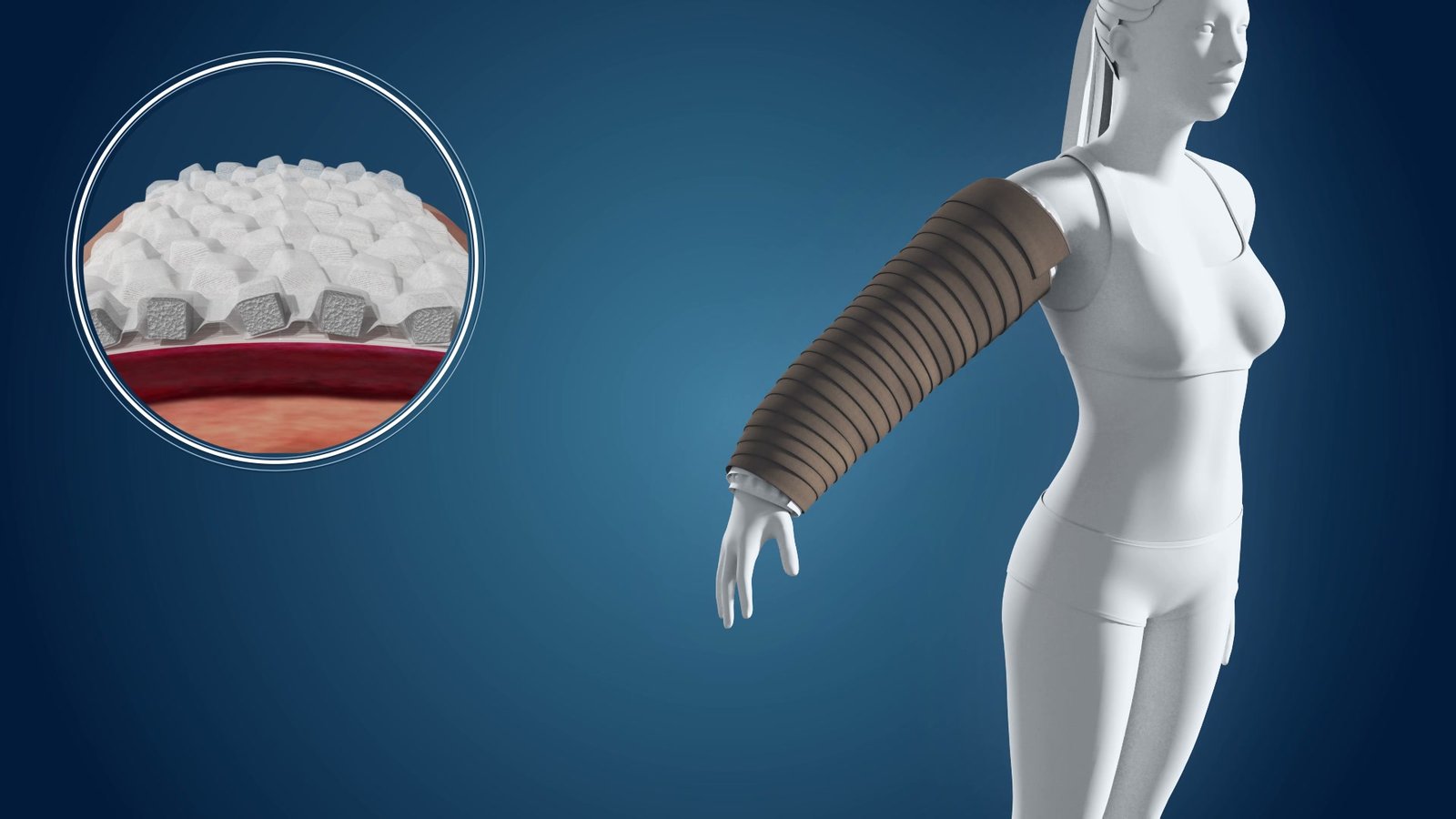
  2. What happens under the skinA tissue cross-section shows the pressure and the direction of lymph drainage - a mechanism nobody sees even in a clinic.
  3. A figure instead of a patientA neutral figure keeps attention on the product. The film can be shown widely, with no image consents and no treatment footage.
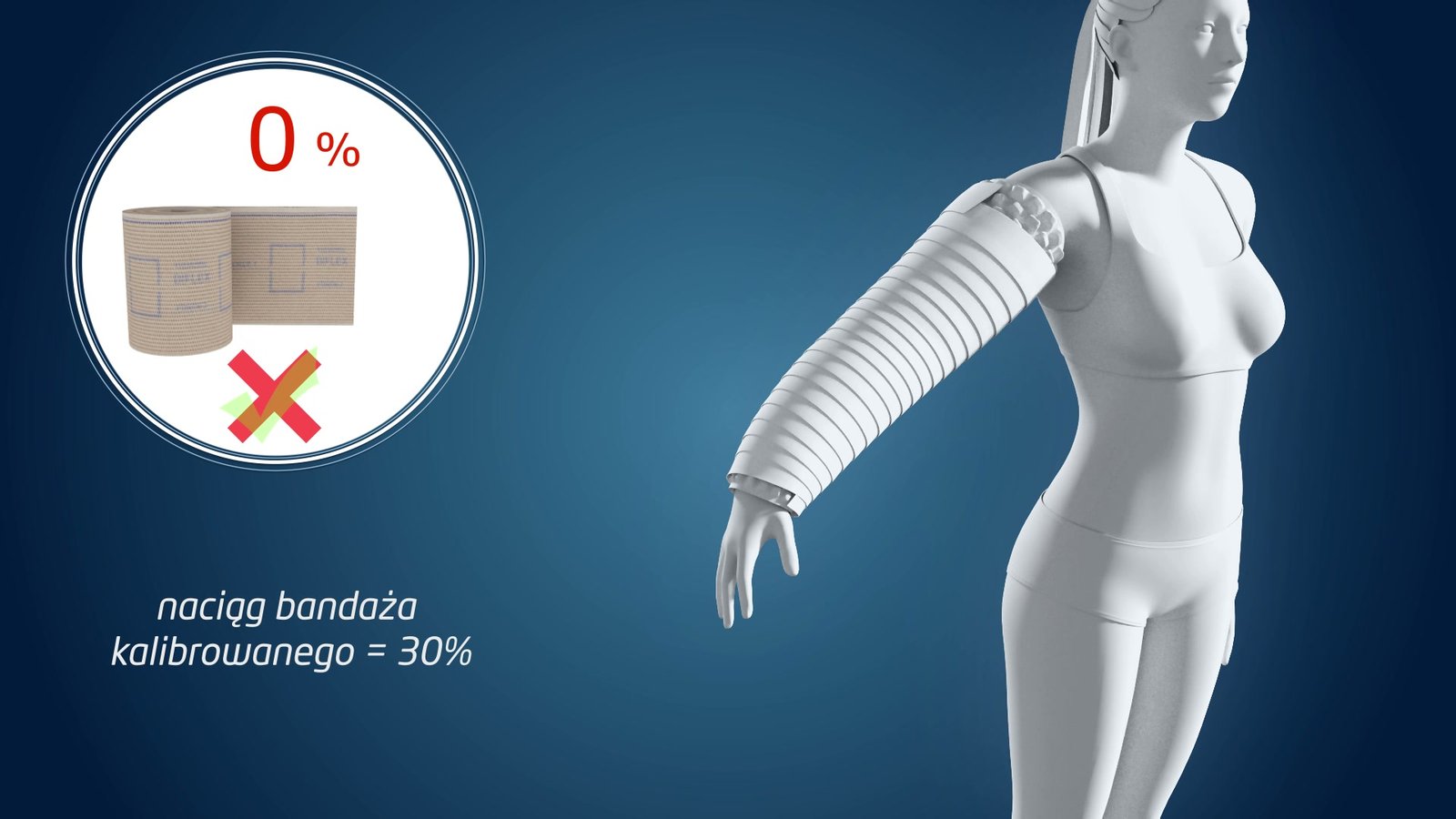
  4. The detail that decides the resultThe stretch indicator on the calibrated bandage is shown exactly as the person applying it will see it.
  5. Advertising that teachesThe same minute answers the therapist's "how" and the doctor's and distributor's "why it works".
  6. Ready for more marketsShort on-screen captions can be swapped without touching the image, so one animation serves many language versions.

A photo shows the dressing, an animation shows the therapy

Bandaging for lymphoedema is a procedure with an order, a tension and several types of bandage that have to be right. A photo of the finished dressing does not say in which order the layers go on or what they do underneath. Clinic footage cannot show it either, and it needs a patient, consents and a film set.

The 3D animation starts with the cause - lymph stasis seen under a magnifier - and then builds the dressing layer by layer. Each element is labelled in the frame, so the viewer follows the protocol without a voice-over. The same approach works for any medical animation of a procedure that cannot or should not be filmed.


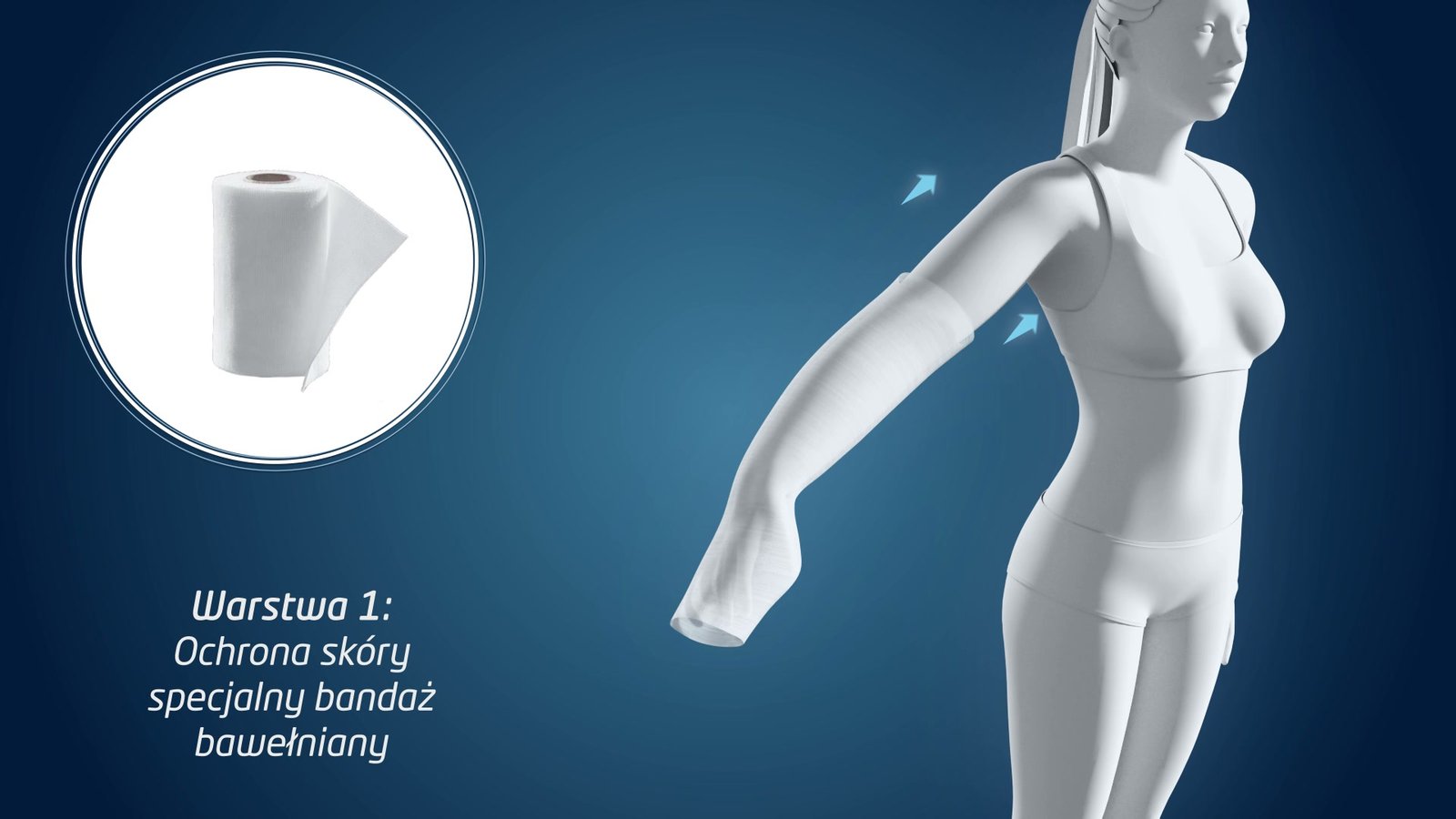
Layer 1: cotton bandage protecting the skin
1Skin protection - cotton bandage
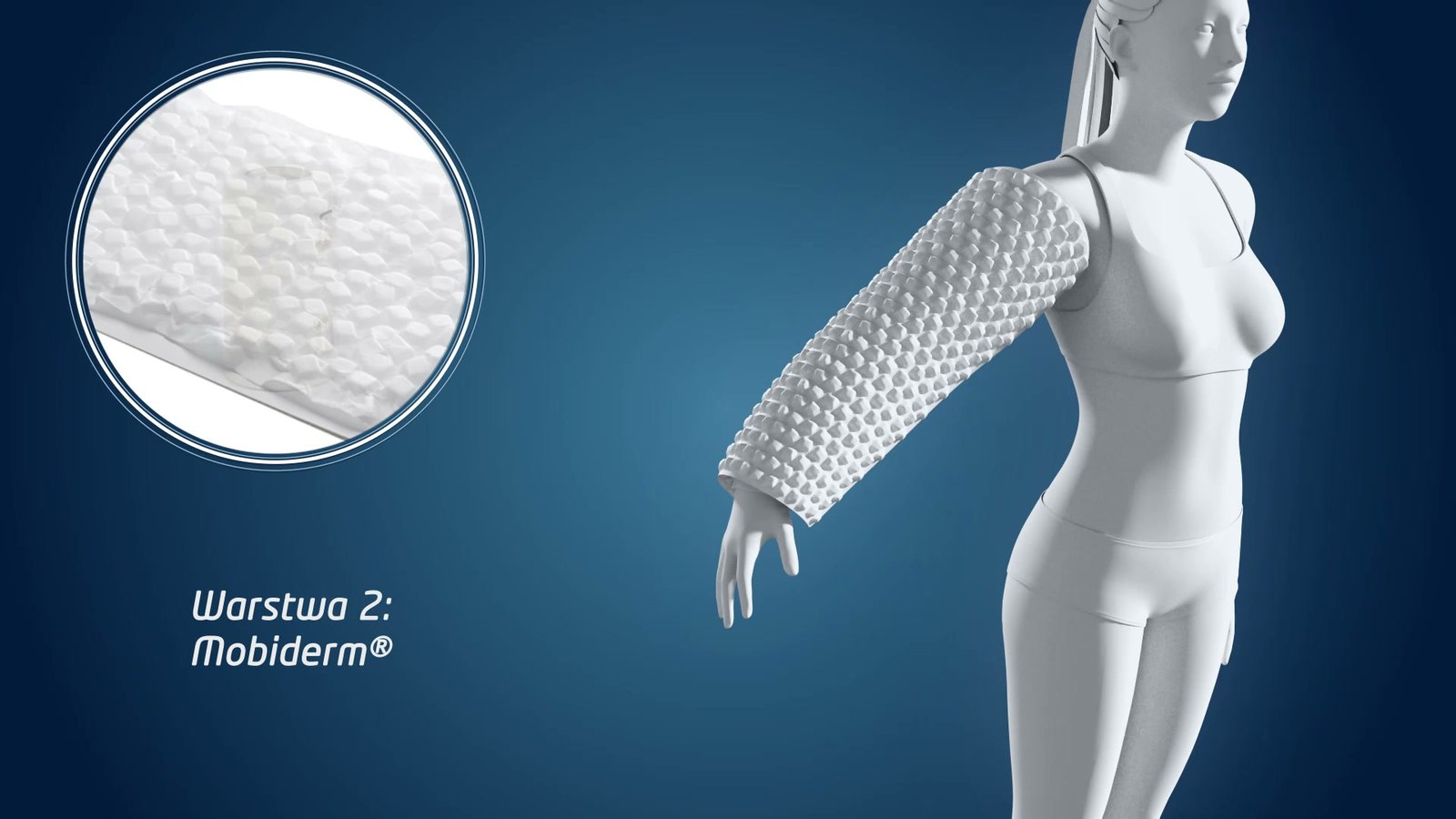
Layer 2: Mobiderm pad on the arm
2Mobiderm® - pad under the bandage
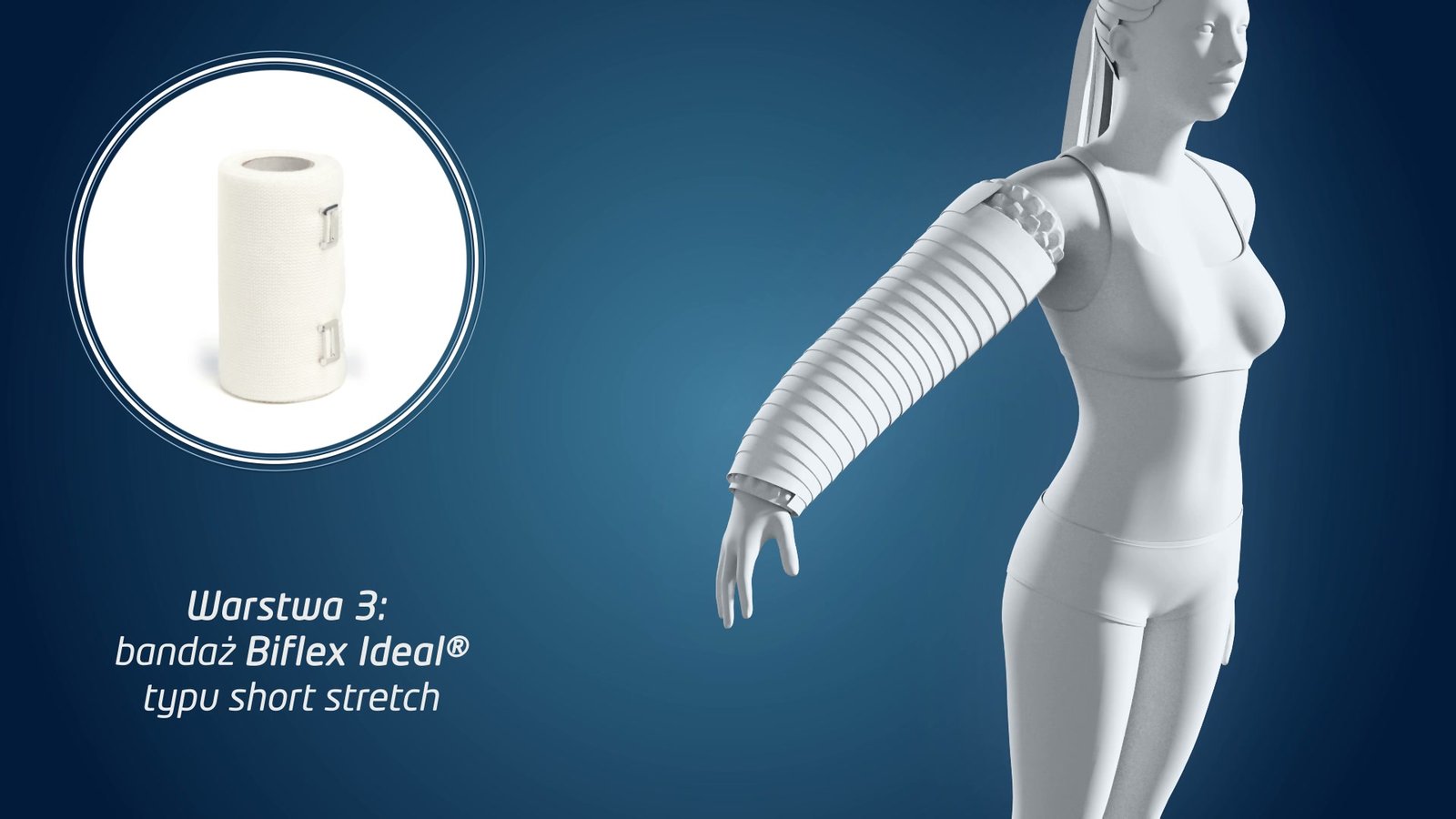
Layer 3: Biflex Ideal short-stretch bandage
3Biflex Ideal® - short-stretch bandage
Stretch indicator on the calibrated bandage
4Stretch - indicator on the calibrated bandage

Launching a medical device?

An animation shows how to use it and why it works - at trade shows, in training and in advertising. The calculator gives an estimated cost in two minutes.

Check the estimated cost

A cross-section shows the mechanism, not just the product

The most valuable scene is the tissue cross-section under the bandage. It shows the blocks of the Mobiderm pad and pressure arrows - strongest at the wrist, weakest at the shoulder - and the direction of lymph drainage. The manufacturer describes how the blocks create pressure differences under the bandage that help move lymph (Thuasne, Mobiderm). The animation turns that description into a picture people remember.

It is the same technique used for implants, filters or mattresses: a 3D cross-section opens the product exactly where its advantage begins.


Tissue cross-section with Mobiderm blocks under the bandage

  1. Medical trade showsA silent loop with on-screen captions explains the product to people walking past the stand.
  2. TrainingStaff and distributors watch the protocol step by step and can pause on every layer.
  3. Advertising and product pagesA clean image with no blood and no patient fits campaigns and product pages.


Frequently asked questions

Questions medical device manufacturers and distributors most often ask when planning an animation for advertising, training and trade shows.


Does a medical device animation need to show a real patient?

No. A neutral figure keeps attention on the product and the procedure, and the film can be used widely with no image consents and no treatment footage.

Where anatomy matters, tissue cross-sections are added - as in the Mobiderm animation for Thuasne.


How do you show how a device works under the skin?

With a cross-section that opens the tissue at the right moment. Pressure or flow arrows show the mechanism, and a short on-screen caption links it to the result of the therapy.

The description of the mechanism should be based on the manufacturer's own documentation, so the film says exactly what the device documentation says.


Can one animation work for both advertising and training?

Yes, if every step is labelled in the frame with a short caption. The same film works at trade shows, in campaigns and in staff or distributor training.

Shorter clips - a single layer or just the cross-section - can be cut for social media and sales presentations.


How much does a medical device animation cost?

The cost depends on the length of the film, the number of scenes and whether tissue cross-sections are needed. Ready CAD files of the product, or accurate photos and dimensions, shorten the work.

The cost calculator gives an estimate in two minutes. An exact quote follows a conversation about the product and the channels where the film will work.


Have a similar project?

Describe your product and the channel where the animation will work - we will reply with suggested shots and a quote.