For Almadent, a dental technology workshop operating since 1999, we created a 3D dental implant animation and visualizations explaining the implantation procedure — clear for the specialist and accessible for the patient, without a single drop of blood. The challenge was showing the moment the implant connector seats into the bone — an event happening inside the patient, somewhere no camera can reach. We solved it with tissue transparency and dynamic layer cross-sections, producing materials that served at once as a sales tool, training material, and trade show promotion.


Client: ALMADENT Aleksander Orzełowski — dental technology workshop, operating since 1999
Scope: visualizations, animations
Industry: Medtech / dental technology — implantology
Technique: Tissue transparency and dynamic layer cross-sections
Application: Promotional materials · training materials · trade shows
Visuals delivered: Implant connectors · superstructures · prosthetic bridges
DENTAL 3D ANIMATIONS |implants Almadent
Is it possible to show medical procedures and dental treatments without spilling a drop of blood?
How to intricately showcase the installation of implants in a simple, understandable, and aesthetically pleasing manner?
As a team of computer graphics engineers, we have one answer to both questions: 3D animation. This medium allows us to scrutinize complex processes and showcase industry solutions in detail. We present products while focusing on their essential benefits and features in a clinically clear environment.
—
Where traditional cameras fall short, we employ 3D shots with tissue transparency or dynamically emerging cross-sections. This way, the audience can concentrate on the assembly and connection of components, which is crucial in the field of implantology.The 3D visualizations we create for the dental industry are used in online publications, printed promotional materials, and trade show videos.
In an accessible and understandable manner, we present the advantages and intricate medical processes.


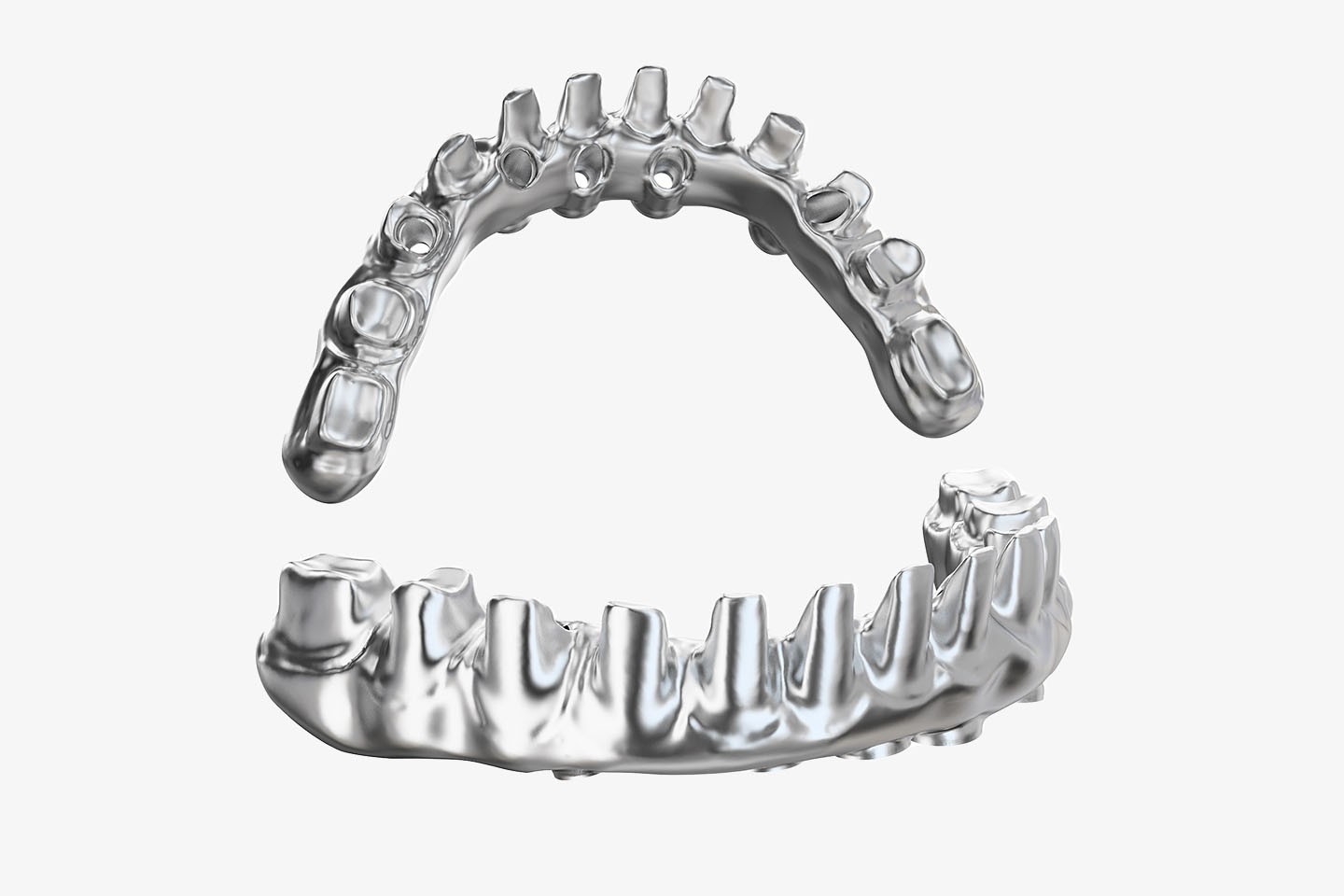
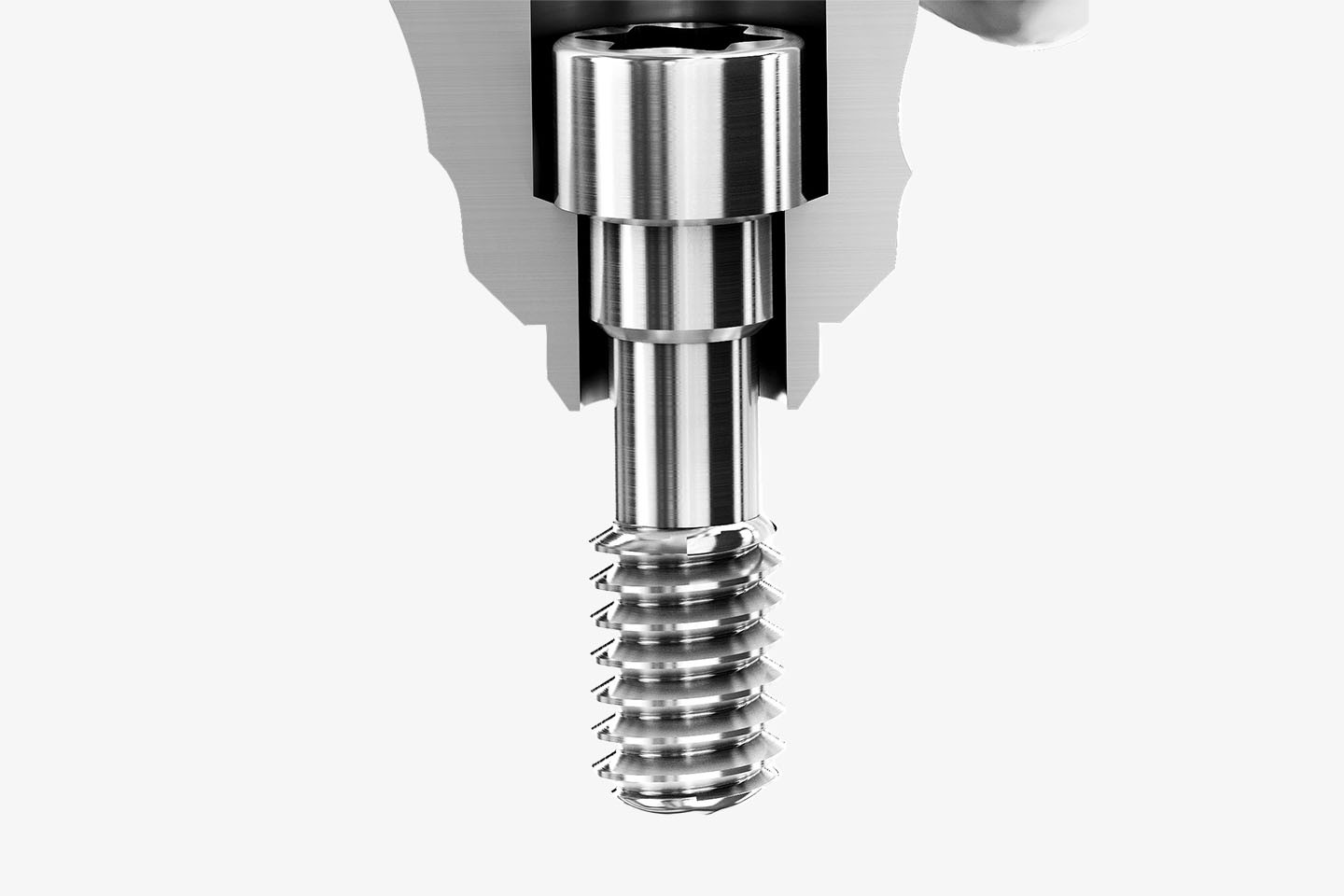

—
The Almadent dental technology workshop has challenged us to create promotional and instructional materials to support their marketing efforts. Based on CAD files, our task was to produce high-quality renderings of implant connectors.


Challenge: how to show what happens inside the patient’s body
How do you explain a dental implant procedure — clearly enough for the specialist who has to trust it, and simply enough for the patient who has to understand it — when the decisive moment, the connector seating into the bone, happens somewhere no camera can reach? Almadent needed promotional and instructional materials for their implant connectors and superstructures, without a single drop of blood and without any medical clutter distracting the viewer.
Solution: a 3D dental implant animation in cross-section and transparency
Working from the client’s CAD files, we built precise 3D models of the implant components, then showed them the way only 3D allows — in a clinically clean setting, with tissue transparency and dynamically revealed layer cross-sections, so the viewer can follow exactly how each element assembles and connects. In implantology, that fit is the whole point — and the hardest thing to show any other way.
The finished visualizations and animations work across Almadent’s entire marketing stack — online publications, printed promotion, and trade show video — serving as both a sales tool and training material at once. We take a similar approach across other medtech projects — for example, the medical accessory visualizations for Sol-Millennium, where 3D explains an equally camera-inaccessible safety mechanism. Both projects are among our medical and engineering 3D animation examples.
What the client gained
- Showing the moment of implant placement — something no camera could capture — in cross-section and transparency.
- Material that’s convincing for the specialist and accessible for the patient, without a shock factor — zero blood, a clinically clean setting.
- One production, three uses — sales, clinical staff training, trade show materials.
- CAD-based accuracy — a model faithful to the real product.
- A consistent visual standard across all of the workshop’s promotional materials.
Frequently asked questions
Can 3D animation replace real footage of an implant procedure?
In many cases yes, and sometimes it’s the only option available. The moment an implant connector seats into the bone happens inside the patient’s body, somewhere no camera can reach. 3D animation lets us show it in cross-section, with tissue transparency, from any angle, without the limits of physical filming equipment and without a shock factor for the viewer.
How long does it take to produce a 3D dental implant animation?
It depends on the complexity of the component and the number of variants to show. A single instructional animation, like the ones for Almadent’s connectors and superstructures, usually takes a few weeks from receiving technical documentation (ideally CAD files) to finished material.
Do we need CAD files to commission this kind of animation?
It’s definitely the best starting point. Working from a client’s technical documentation — CAD files, engineering drawings — means the 3D model is a millimeter-accurate reproduction of the real product, not an approximation based on photos or a description. In implantology, where precise component fit is everything, that precision has a direct impact on the material’s credibility.
Can the same material be used for both marketing and staff training?
Yes — that’s one of the main practical advantages of this kind of production, and exactly how we built it for Almadent. The same set of visualizations and animations covers promotional material, instructional content for clinical staff, and graphics for trade show booths — without organizing a separate production for each purpose.
Does a dental animation need specialist review before publishing?
Definitely, and we recommend it at every stage of production. Medical material has to be factually accurate — that’s why we work from the client’s technical documentation, and the final result is always reviewed and approved by the Almadent team before publishing, both technically and from a regulatory standpoint.


