Modelight — 3D animation studio MODELIGHT
Home 3D Studio CNC Animation Medical Blog Wersja polska Get a quote →
Guide · ROI · 2026

Is 3D animation worth it?

Before a budget gets signed off, the question is rarely "what does it cost". It's "what do we get out of it". That's a fair question. Here's where the return on technical 3D actually comes from, where it shows up fastest, and what the data says about the way B2B buys today.

See where it pays off →
7 min read· Jakub Marczuk, Modelight· Updated 2026

The short version

Where the return actually comes from

The return on technical 3D comes from three places: a shorter sales cycle (buyers understand faster), a lower cost of explaining (fewer meetings, demos and site visits), and reuse of a single CAD file across many deliverables. The more expensive and the harder to show your product is, the bigger the return.
Read the full sectionCollapse

The easiest way to see it is to count what not being understood costs you today. How many meetings does it take to explain how your machine works? How many people repeat the same walkthrough week after week? What does it cost to ship a unit to a customer site for a demo — and how many demos happen before one signature?

An animation isn't a line item for "graphics". It's a tool that shortens that list, and that's how its value is worth counting: not as the price of a nice film, but as an investment that buys back your sales team's time and moves the customer's decision along.

In B2B, most of the decision happens without you

Gartner's research puts supplier meetings at just 17% of the entire B2B buying journey. If a customer is weighing three vendors, each of you gets 5–6% of their time. The rest is spent researching alone — and 75% of buyers say they'd rather complete the purchase with no sales rep involved at all.
Read the full sectionCollapse

It's an uncomfortable conclusion with a simple consequence: if your product doesn't explain itself — visually, in under a minute, on a screen someone is looking at in the evening without your salesperson — you're out of the running before the conversation starts. And a technical product rarely defends itself with a spec sheet.

That's where animation earns its place. Wyzowl's 2026 report found that 96% of people have watched an explainer video to understand a product, and 85% say a video convinced them to buy. For a product whose value is hidden on the inside — in the flow, in the tolerance, in the layer nobody sees — animation is the only medium that shows it before anyone takes anything apart.
Showing what can't be seen

One animation explains and sells at the same time

Above, a CNC tool marks code directly into a metal surface. You can't film that from the outside — it happens at a fraction of a millimetre. The animation shows how it works and builds the brand while it does it:

Where it pays off — three projects

The return on technical animation rarely shows up in a single budget line. It shows up where animation replaces something that couldn't be done otherwise: showing a product that doesn't exist yet, having every asset ready before launch, or training people on a procedure no camera can reach.

A product there was no way to film

For Aircraft Towing Systems we built the model and animation of an autonomous aircraft towing system — a technology that didn't physically exist when the material was made. There was nothing to film and nothing to photograph. The animation became part of the investor pitch, and the project went on to secure investors in the United States, patent protection in more than a dozen countries, and a prototype in Oklahoma. It's the cleanest example of a return no photograph could have produced, because the subject of the photograph wasn't there yet.

See the project: ATS aircraft towing system →

One asset that sells and trains at once

For Almadent we visualised an implant procedure: tissue rendered transparent, dynamic cross-sections through each layer, a clinically clean environment. The result works in sales and in training at the same time. That second job is usually left out of the calculation, and it's the one that runs longest — a new hire watches exactly what the customer watches, and understands the product faster than any manual could explain it.

See the project: Almadent dental implant animation →

The photoshoot you never have to run

For oak furniture maker Magnat we produced interiors and packshots from a model that shows the same piece in any colour and finish. It works as a virtual photoshoot: no studio, no photographer, no physical sample in every variant. A single model delivers the full set of shots, and each new version is a change of settings rather than another day of shooting.

See the project: Magnat virtual furniture photoshoot →

All three share the same logic. The animation wasn't a marketing expense — it was a shortcut: to an investor, to understanding, and to a complete set of images.

One CAD file, many deliverables — where the return compounds fastest

Animation pays back hardest when a single CAD file becomes a 3D model used across many deliverables. You pay for the modelling once, and the output covers the whole funnel — from the trade show stand to the technical documentation.
Read the full sectionCollapse

A single well-prepared 3D model typically yields:

  • commercials — for trade shows, the website and social,
  • instructional films — assembly and operation, step by step,
  • product visuals — for the catalogue and the online store,
  • large-format graphics — for the trade show stand build,
  • cross-sections and exploded views — opening the product up.

You can see it in our own work. For AFL Motors, one set of fan models produced both commercials and material explaining how the product is built — one source, many uses. HF Inverter got a full campaign out of CAD files (catalogue, website, explainer film and an interactive 360° view on the site) ready on launch day, before the first prototype existed. Pokolm put the same 3D models to work at trade shows — large-format prints across the stand, catalogue graphics and animation on screen — with no additional photography at all.

AFL Motors — what industrial fans do and where they're used. One CAD file produced both the commercial and the material explaining how the product is built.

There's one more benefit that's easy to overlook: animation walks straight past the language barrier. An instructional film works the same in Poland, in Germany and outside Europe — no translator, no voiceover in five languages. Fewer assembly errors, fewer complaints, lower service costs. That's a return too; it's just booked outside the sales department.

Instructional film: fitting an inline water filter, step by step. It shows how simple the replacement is without a single word — whatever language the viewer speaks.
B2B buying data · 2026

The decision is made outside the meeting room

The less time buyers spend with sales teams, the more rides on the materials that explain your product when you're not there.

0%
of the buying journey is spent with suppliers
Split across three vendors, that's 5–6% of the buyer's time each.
0%
of buyers would rather decide without a rep
Buying unaided is now the preference, not the exception.
0%
have watched a video to understand a product
Video is how a customer meets a product first.
0%
were convinced to buy by a video
Video genuinely moves the purchase decision.

Sources: Gartner — B2B Buying Journey · Wyzowl — State of Video Marketing 2026.

Pricing

What drives the price of a 3D animation

Product complexity
A carton and a CNC machine with a hundred moving parts are two completely different jobs. What counts isn't size — it's the number of parts that have to move correctly.
CAD files
A ready CAD file cuts the cost of modelling by up to 40%. Without one we build the model from scratch — from a technical drawing, from photographs, or if that's all there is, from a sketch.
Shot count and length
A ten-second teaser and a five-minute technical film are different scales of production. Every shot means its own lighting, framing and render time.
Physics simulation
Fluid flow, heat exchange, the behaviour of metal under machining — no preset does that for you. It adds work, and it's often the entire point of the material.
Channels and variants
The more deliverables come out of one model, the lower the cost of each. It's the only factor on this list working in your favour — worth planning for from the start.
Scroll to explore

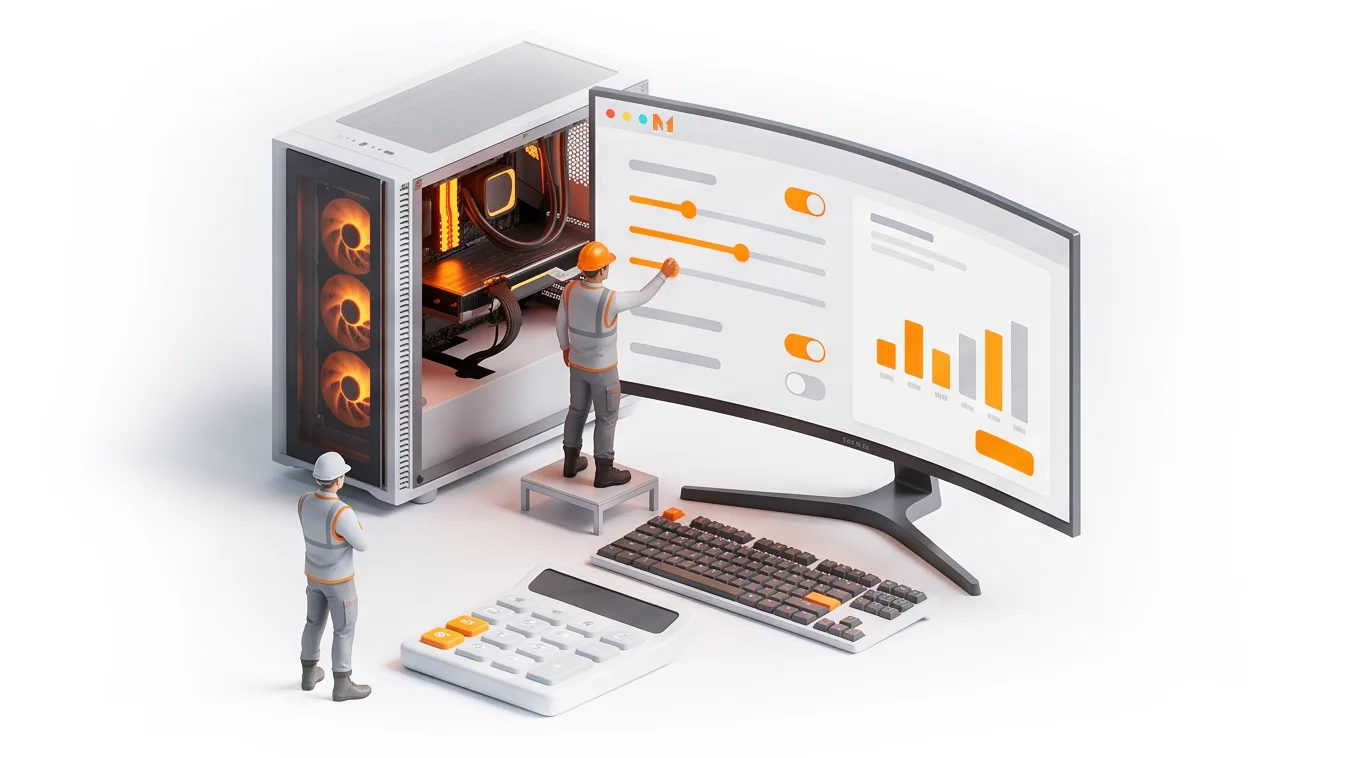
There's no honest fixed price list — every animation is quoted individually. The quickest way to get a ballpark for your own product is our pricing calculator, and the full breakdown of what moves the number sits in our guide to how much 3D visualization costs. A specific quote is free and comes back within 24 hours of receiving a brief or a CAD file.

When 3D animation isn't worth it

Not every product needs animation, and we'd rather say so plainly. There are cases where a photoshoot or a simpler asset is the better call.

Read the full sectionCollapse

Cases where 3D rarely pays for itself

  • the product is simple, exists physically in one version, and its strengths are obvious in an ordinary photograph (small accessories, standard finished goods),
  • you need one shot for one publication, rather than an asset meant to work across several channels at once,
  • the material is built to live for a few days in a single social campaign, not to support sales for years.

One myth is worth putting to rest, though — that 3D only pays off where there's something to show on the inside. Visuals of a product seen from the outside pay for themselves just as well, for a different reason: they replace the photoshoot. No studio, no photographer, no physical sample in every colourway, and the full set of shots comes out of a single model.

Technical 3D animation wins wherever the important part happens inside or in motion: in the cross-section of a machine, in the flow of a medium, in the order of assembly, in an action no camera will ever record. If that's your product, the return tends to arrive sooner than you'd expect.

Frequently asked questions about 3D animation ROI

Is 3D animation worth it?
Yes — if the product is complex, expensive, or hard to show convincingly in a photograph. The return comes from three places: a shorter sales cycle, fewer meetings spent explaining, and one CAD file reused across many deliverables. The higher the value of the product and the harder it is to grasp without an engineer in the room, the bigger the return.
How long before a 3D animation pays for itself?
The first effects — shorter presentations, longer time on page, more enquiries off the back of a trade show — usually show within the first few months. The full return from a faster sales cycle lands once the first deals close with the animation doing part of the work. On products with a long buying process, that is measured in months rather than weeks.
Can several deliverables come from one CAD file?
Yes. A single CAD file becomes a 3D model used across commercials, instructional films, catalogue and e-commerce visuals, large-format graphics for trade show stands, and assets for the website and social. You pay for the modelling once and the output covers the entire funnel.
What is the difference between technical and commercial animation?
Technical animation mirrors reality: dimensions match the specification, movement follows physics, the model is built from CAD data. Commercial animation leads with aesthetics and emotion. In B2B, where an engineer reviews the material, accuracy is what counts — a beautiful film with a technical error destroys credibility faster than it builds it.
Does 3D animation increase B2B sales?
Yes, because it shortens the time a buyer needs to understand the product, and that speeds up the decision. Wyzowl reports that 85% of people have been convinced to buy by a video. Given that supplier meetings account for just 17% of the B2B buying journey (Gartner), material that explains the product without a sales rep present often decides whether a conversation happens at all.

See what your product stands to gain

Got a product that a photograph can't do justice and a spec sheet can't explain? Get a ballpark from the calculator, or send us a CAD file — we'll come back with a specific quote within 24 hours.