3D CNC animation is a technical animation that opens up a machine or tool and explains how it works in a few seconds — no teardown, no photo shoot required. It's built from your CAD files, works at trade shows, on LinkedIn and in the catalog, and one asset earns its keep for years. Below: what it shows, how the process runs, and what drives the cost.
Instead of describing it, let's show it. Below is an animation of the Spinworx cutting tool: you can see exactly how the milling cutter works, and where the machined part actually ends up. That's precisely the layer no catalog photo can capture.
How the milling cutter works — from blade to finished part
A promotional-technical animation showing the cutter's geometry and motion in slow motion, then the context — what the machined part is actually used for. The same asset runs at trade shows, on social media and on the manufacturer's website.
The part being milled by the tool in this animation is a mounting component for a passenger aircraft's landing gear leg. A few grams of chip more or less decide the tolerance that landing safety depends on — and that's exactly the kind of precision you can't see in a photo, but can see in a 3D animation.
01What 3D CNC animation shows
3D CNC animation shows what you can't see from the outside: blade geometry, precision mechanisms, coolant flow, the cutting principle, and the machine's interior in motion. A cross-section and slow motion explain a product's edge faster than a spec sheet.
A large part of CNC technology can't be photographed — because it happens inside the machine, or too fast to capture. The buyer (an engineer, a process technologist, procurement) wants to understand how a product works and why it's better. Technical animation answers that visually: it opens the housing, slows the motion down, and singles out the detail that matters.
- 3D cross-sections — the machine's interior, cooling, tool geometry.
- Working principle — how the tool cuts, how the machining cycle runs.
- Slow-motion close-ups — detail your naked eye would never catch.
- Working context — the machine on the shop floor, on the line, in production.
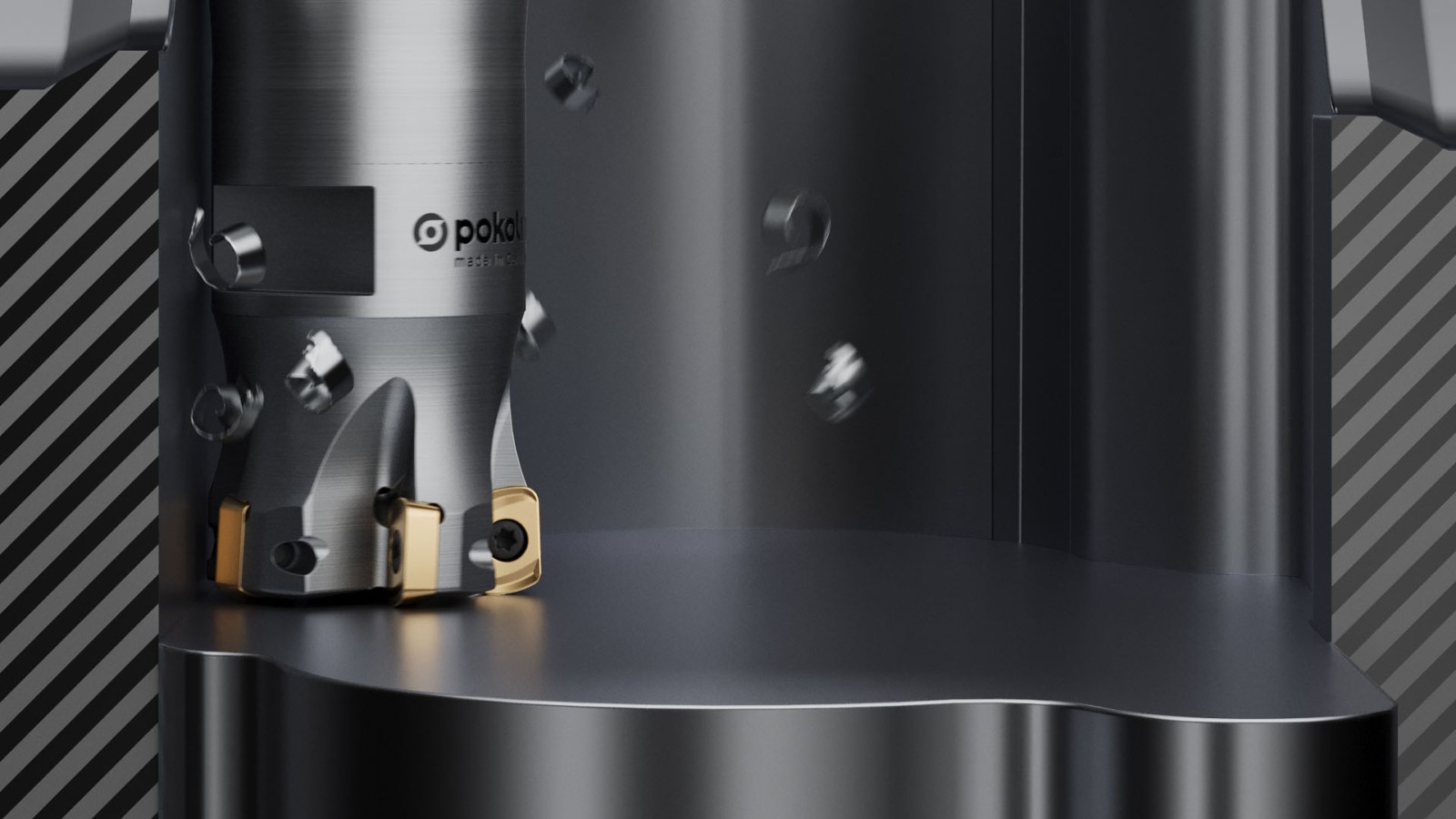
A photo shows what a product looks like from the outside. 3D animation shows how it works inside — and in CNC technology, it's exactly that interior and motion that carry the value. One render replaces a photo shoot that couldn't happen anyway, for a mechanism hidden by design.
A manufacturer of CNC machines and tools is selling an advantage you can't see: precision, geometry, the cooling method, the work cycle. Photography shows the housing. 3D animation takes the housing off and shows what's inside — exactly where the sales argument lives. And one source file covers every channel: a product change means swapping the 3D model, not booking a new photo shoot.
Every Blade Has a Reason
Cutter geometry, rake angle, chip evacuation — an engineer decides all of it, and the customer never sees it in a photo. 3D animation pulls that detail out of the dark and shows it in motion, in close-up, in slow motion. Understanding how a product works and what makes it better often moves a purchase decision more than the spec sheet alone.
We do the same for machines, tools and components in our CNC animation services and technical visualizations.
03How the animation is made — from CAD file to finished asset
A technical CNC animation takes 3–6 weeks: brief and goal (30 minutes), CAD import, build with sign-off at every stage, delivery in formats for trade shows, web and print. CAD files speed up the work and lower the cost, because the geometry drops straight into the scene.
Brief & Goal
A 30-minute call: what to show, for whom, on which channels. Quote within 48h.
CAD Files
STEP, IGES, SolidWorks, Inventor — we import the geometry and build the 3D scene.
Animation & Render
Storyboard, previz, working cut — you sign off on every stage before we move forward.
Delivery
MP4, MOV, PNG/EXR sequences, CMYK PDF — for trade shows, web and print. Full license.
We break this process down in more detail in two dedicated guides: how 3D animation is made, step by step and how a CAD file becomes a finished render. It's also worth checking the 3D terms glossary if any term needs explaining.
One 3D asset runs in parallel at trade shows, on LinkedIn, on the website, in the catalog and in training. Animation crosses the language barrier — it works at trade shows in the DACH region, the US and Asia without translating a catalog.
- Trade shows — the booth screen grabs attention and explains when your sales rep is busy.
- LinkedIn & social — motion holds attention better than a static banner.
- Website & catalog — the same 4K render serves the screen and 300 DPI print.
- Training — animation replaces a multi-page assembly manual.
More on weaving 3D animation into campaigns and the sales funnel in our guide 3D animation in B2B marketing.
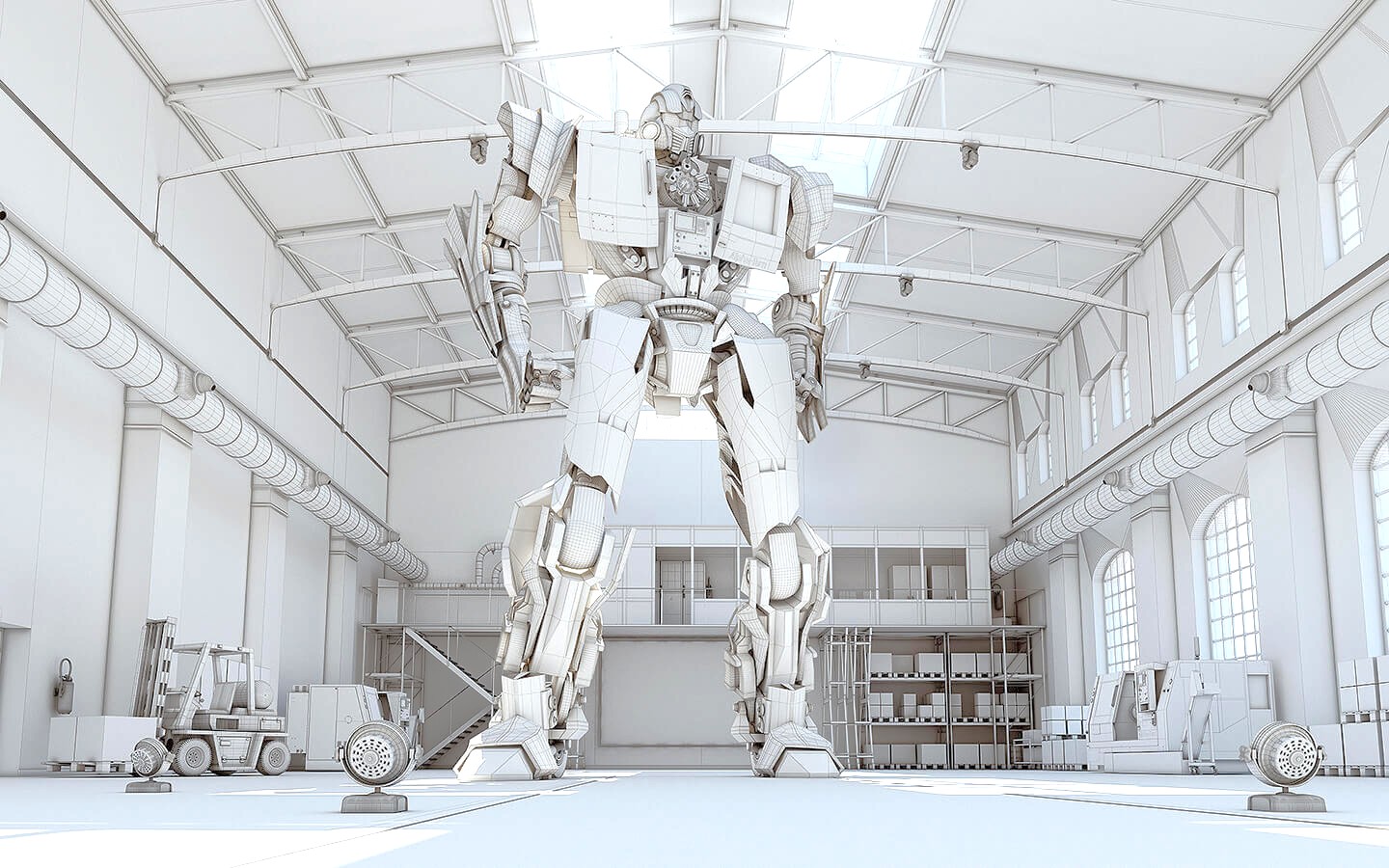
A CNC Machine Becomes a Robot — Paced by Your Scroll
This animation doesn't play on its own — your scrolling drives it. Scroll down and it moves forward; scroll up and it reverses. We can build the same mechanism (familiar from Apple product pages) into your product page: a visitor "takes the machine apart" or watches the machining cycle at their own pace, instead of passively watching a video.
Cost depends on model complexity and runtime — a short product spot and a 60-second technical animation with cross-sections are different jobs. Rather than quote a range that might not fit your product, we point you to the calculator and pricing guide.
The main cost drivers are: geometry complexity, length and number of shots, cross-sections and mechanism animation, number of language versions and aspect ratios, and whether you have CAD files (they noticeably shorten the work and lower the cost). We prepare a binding quote for free within 48 hours of your brief.
06What the data says — and the science of animation
How does video actually perform in marketing, according to research? And why does motion sell better than a static image? Here's what the numbers — and the science of animation — say.
The higher the d, the stronger the effect. Realistic animation teaches ~2×, and "how something works" knowledge ~3× more effectively than a static image.
Sources: Wyzowl, Video Marketing Statistics 2026 (n=266 study, late 2025). · Höffler & Leutner, "Instructional animation versus static pictures: A meta-analysis", Learning and Instruction 17(6):722–738, 2007 — a meta-analysis of 26 studies.
07Real CNC Projects
Two examples for manufacturers of CNC tools and machines: Pokolm (a German tool manufacturer) and KAAST (a US CNC machine-tool builder). Each solved the same problem differently — how to make a technical product understandable to a buyer.
Gravfix — how an engraving tool works
A technical animation showing, in slow motion, exactly how the tool works — a close-up on the geometry and the process a photo can't capture. Used at trade shows, as an explainer, and on the manufacturer's website.
More about the Pokolm project →CNC Router → Robot — a Brand Story
A router's transformation into a robot, told as a brand story for social media and trade shows. A branded animation that pairs technical precision with a narrative that holds attention.
More about the KAAST project →08Frequently Asked Questions
Technical CNC animation shows how a product works — the tool's cutting principle, blade geometry, machining parameters, the machine's interior. Promotional animation focuses on look and emotion. At Modelight we combine both: engineering precision in an aesthetic that grabs attention at trade shows and on social media.
CAD files (STEP, IGES, SolidWorks, Inventor) speed up the work and lower the cost — we import the geometry directly. If you don't have CAD files, we can also work from technical drawings, photos, or a written description. Either way, we're able to rebuild the product in 3D.
Standard turnaround is 3–6 weeks from receiving the input materials. Simpler projects can be delivered in 2–3 weeks. Every stage — storyboard, previz, working cut — needs your sign-off before we move on to the next one.
We deliver assets matched to the channel: MP4 and MOV for web, social media and trade-show screens, PNG/EXR sequences for post-production, and versions in different aspect ratios (16:9, 1:1, 9:16). Every project comes with a full license with no time or territory restrictions.
Cost depends on model complexity and runtime — a short product spot and a 60-second technical animation with cross-sections are different jobs. Rather than quote a range that might not fit your product, we point you to the pricing calculator and pricing guide. We prepare a binding quote for free within 48 hours of receiving your brief and CAD files.
Yes — we work remotely with manufacturers across Germany, Austria, Switzerland and beyond. Briefing, CAD files and stage approvals all happen online. Pokolm Frästechnik, a German CNC tooling manufacturer, is one of several clients we've delivered multiple projects for this way.
Have a CNC Product That's Hard to Show?
Send over your CAD files, a sketch, or just the idea. We'll tell you honestly what an animation can show, and prepare a free quote within 48 hours.
Request a CNC Quote Calculator